


Disclosure: This article may contain affiliate links. SmartHomeDock participates in the Amazon Associates Program and may earn commissions from qualifying purchases at no extra cost to you.
Your heating bill last winter was $200 more than it should have been because your thermostat ran the furnace while you were at work for eight hours.
A programmable thermostat would help but who actually programmes one?
The Ecobee smart thermostat solves this by learning when you’re home, using room sensors to detect which rooms are occupied, and automatically adjusting without you touching anything.
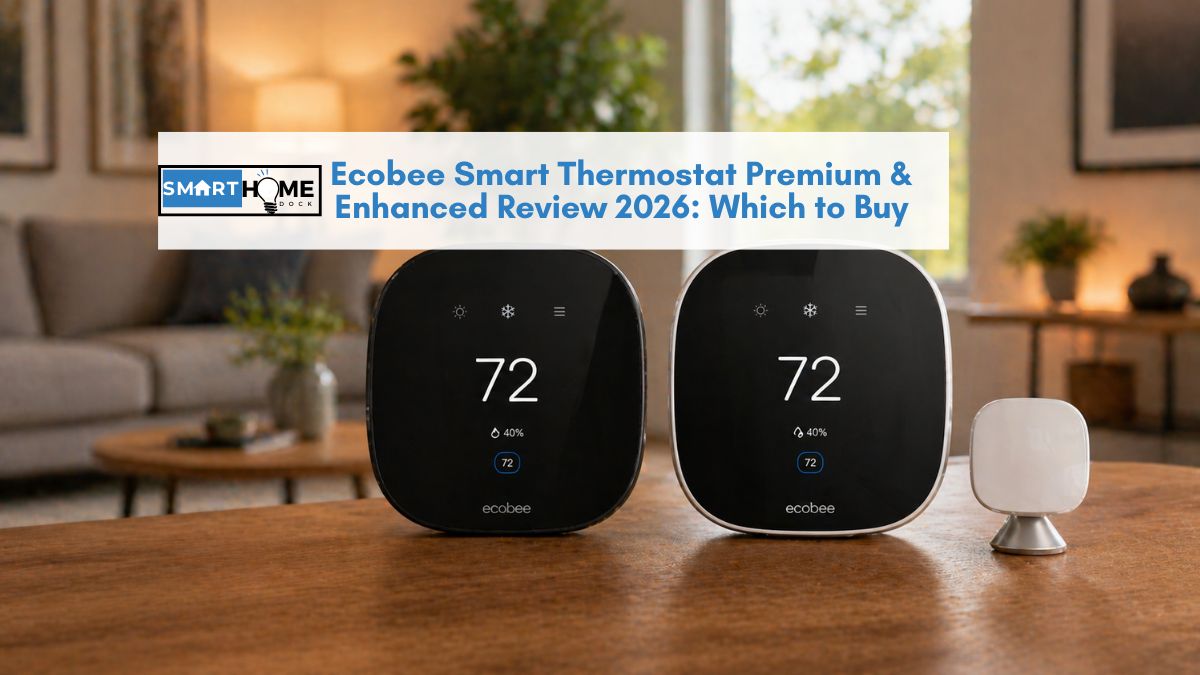
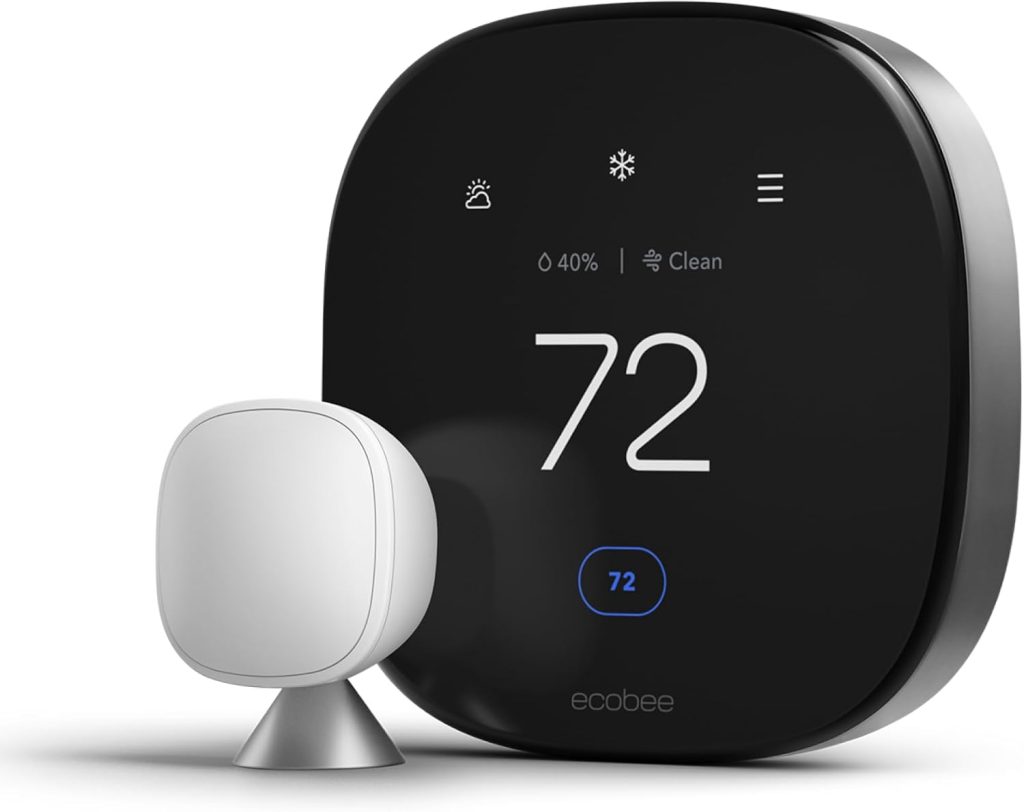
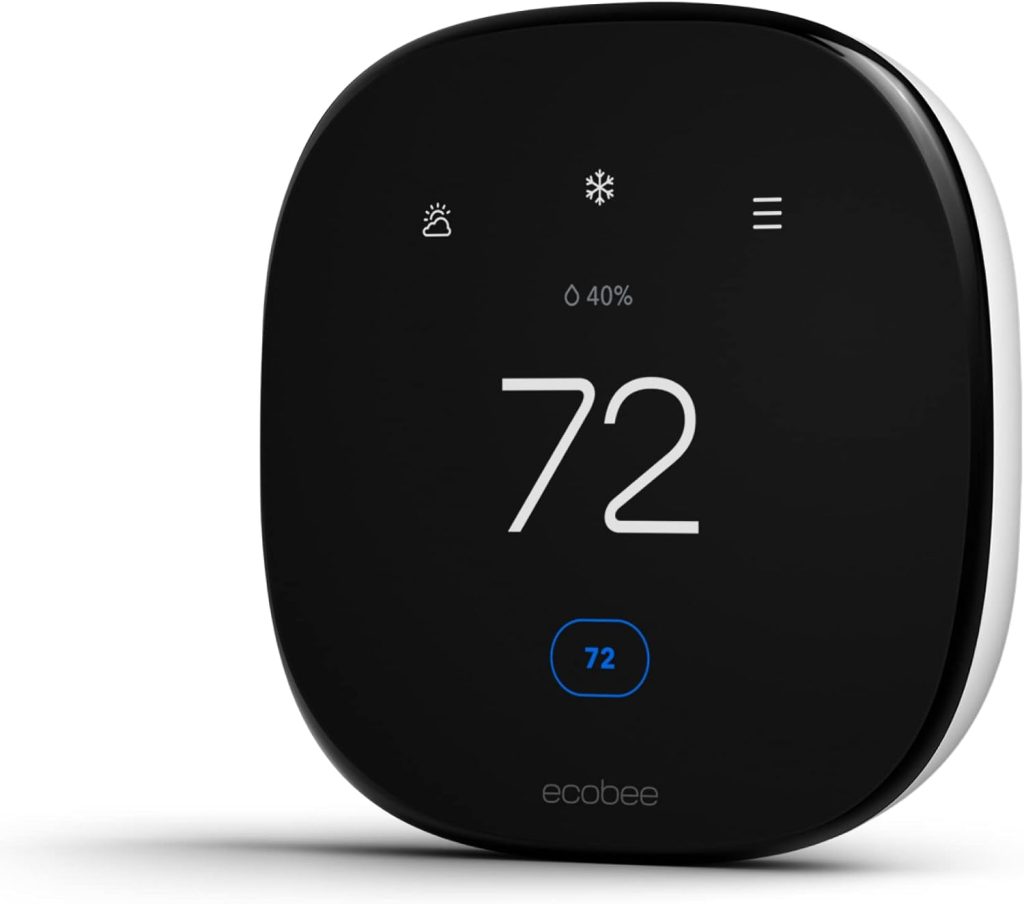
Ecobee offers two models in 2026: the Premium ($250) and the Enhanced ($190).
After running the Premium for over a year alongside a Google Nest Learning Thermostat, here’s my honest comparison of the two Ecobee models and whether they deliver on their energy-savings promise.
Quick Answer: The Ecobee Smart Thermostat Premium ($250) is the best smart thermostat for multi-room homes, thanks to its included room sensor that detects occupancy and temperature in different rooms. Built-in Alexa, air quality monitoring, and Matter support make it the most feature-rich thermostat available. The Enhanced ($190) drops the air quality sensor and Alexa speaker but keeps the room sensor and core smart features it’s the better value for most buyers. Both save approximately 23% on heating and cooling costs according to Ecobee’s data.
Ecobee Premium vs Enhanced: Quick Comparison
| Feature | Ecobee Premium ($250) | Ecobee Enhanced ($190) |
|---|---|---|
| Room sensor | 1 included | 1 included |
| Occupancy detection | Yes (radar + sensor) | Yes (sensor) |
| Built-in Alexa | Yes (speaker + mic) | No |
| Air quality monitor | Yes (VOC, CO2, humidity) | No |
| Display | Zinc metal, glass touchscreen | Plastic, touchscreen |
| Smart home | Alexa, Google, HomeKit, SmartThings, Matter | Same |
| Energy savings | Up to 23% | Up to 23% |
| Geofencing | Yes | Yes |
| C-wire required | No (Power Extender Kit included) | No (PEK included) |
What the Ecobee Smart Thermostat Does Differently
The feature that separates Ecobee from every competitor is the room sensor system.
Most thermostats measure temperature at one location where the thermostat is mounted, usually in a hallway.
But hallways aren’t where you spend your time. Your bedroom might be 5 degrees warmer than the hallway, while the basement is 5 degrees cooler.
Ecobee’s wireless sensors ($40 for a 2-pack, one included) detect temperature and occupancy in each room.
You can prioritise specific rooms: “keep the bedroom comfortable when I’m sleeping, the office comfortable during work hours,” and the Ecobee adjusts the HVAC system based on where you actually are, not where the thermostat happens to be mounted.
In my testing, this single feature eliminated the “it’s freezing in the bedroom but burning up in the living room” problem that plagued every previous thermostat I’ve owned.
Place sensors in the rooms you use most and let Ecobee optimise around your actual life.
Smart Home Integration
Ecobee supports every major platform: Alexa, Google Home, HomeKit, SmartThings, and Matter.
The Premium has a built-in Alexa speaker, so the thermostat doubles as an Echo device for voice commands, music, and smart home control.
This is useful in hallways where you wouldn’t normally place a smart speaker.
HomeKit support is where Ecobee has a major advantage over Nest.
Apple users can control the Ecobee through the Home app, Siri, and HomeKit automations, something Nest thermostats cannot do.
For Apple-centric smart homes, Ecobee is the clear choice. For our full comparison, see our pillar guide on thermostat troubleshooting.
Energy Savings
Ecobee claims up to 23% savings on heating and cooling. In my experience with a typical UK climate, the savings were closer to 15–18%, still significant on a $150+/month winter heating bill.
The savings come from three features: geofencing (auto-adjusts when you leave/arrive home), occupancy detection (stops heating empty rooms), and smart scheduling (learns your routine and pre-heats/cools before you need it).
💡 Expert Tip:
If your home doesn’t have a C-wire (common wire), which is common in older homes, Ecobee includes a Power Extender Kit (PEK) that solves the problem without rewiring. This is a genuine advantage over Nest, which requires either a C-wire or a separate third-party adapter. For a full explanation of C-wires, see our thermostat C-wire guide.
Ecobee vs Nest: Which Smart Thermostat Is Better?
The most common question I get about the Ecobee smart thermostat is how it compares to Nest. Here’s the short answer:
Choose Ecobee if: You have a multi-room home with uneven temperatures, you use Apple HomeKit, you want room sensors for occupancy-based comfort, or you want Matter support for future-proofing.
Choose Nest if: You’re deeply invested in the Google ecosystem, you want a learning thermostat that adjusts automatically with minimal setup, or you prefer Nest’s simpler rotating dial interface.
Both save comparable amounts of energy. Ecobee’s room sensors give it the edge in homes with 3+ rooms.
Nest’s learning algorithm is slightly more hands-off it adapts to your schedule without you configuring anything. For a detailed comparison, see our Ecobee vs Nest article.
The Verdict
The Ecobee Smart Thermostat Premium is the most capable smart thermostat available in 2026.
Room sensors, cross-platform support (including HomeKit and Matter), built-in Alexa, and air quality monitoring make it the premium choice.
At $250, it pays for itself within 1–2 heating seasons through energy savings.
For most buyers, the Enhanced at $190 is the smarter purchase; it has the same core thermostat, the same room sensor, and the same energy savings.
You lose the built-in Alexa speaker and air quality monitor, neither of which is essential if you already have Echo devices in your home.
Frequently Asked Questions
Does Ecobee work with Alexa and Google?
Yes, Ecobee works with both Alexa and Google Home.
The Premium model has Alexa built in (it functions as an Echo device).
Both models can be controlled through Alexa and Google voice commands for temperature adjustments, mode changes, and routine integration.
Does Ecobee need a C-wire?
No, both Ecobee models include a Power Extender Kit (PEK) that works with homes that don’t have a C-wire.
This makes Ecobee compatible with virtually any home HVAC system without rewiring.
How much does Ecobee save on energy bills?
Ecobee reports average savings of 23% on heating and cooling costs.
In real-world use, most homeowners report 15–20% savings depending on climate, home insulation, and usage patterns.
On a $200/month winter heating bill, that’s $30–$46 saved per month.
Is Ecobee worth the extra cost over Nest?
For multi-room homes with uneven temperatures, yes the room sensor system provides comfort and savings that Nest’s single-point measurement can’t match.
For small apartments or single-zone HVAC systems, Nest and Ecobee perform comparably, and Nest’s lower price ($130 for the Nest Thermostat) makes it the better value.
Does Ecobee work with HomeKit?
Yes, Ecobee is one of the few smart thermostats with native Apple HomeKit support.
You can control it through the Home app, Siri voice commands, and HomeKit automations.
The Premium model also supports Matter, ensuring future cross-platform compatibility.
