


This article contains affiliate links. If you buy through them, SmartHomeDock earns a small commission at no extra cost to you. We only recommend products we’ve actually tested or verified for current availability.
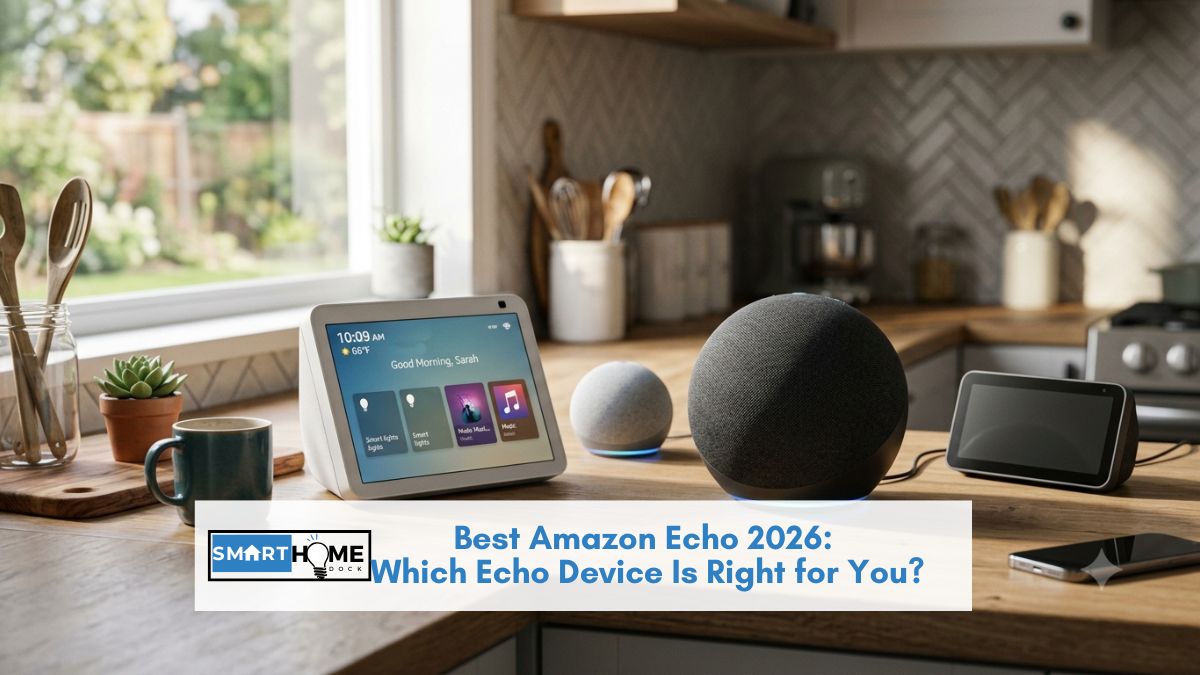
There are eleven current Amazon Echo devices. They range from $35 to $350. Six of them are speakers, four are displays, and one is a smart home control panel.
Amazon’s product page treats them as roughly equivalent. They aren’t.
The single most useful thing to know before buying: if you’re an Amazon Prime member, you already have Alexa+, the AI-upgraded assistant that Amazon launched in February 2026, at no extra cost. Every Echo now runs the same Alexa brain.
The decision is based on form factor (speaker vs display vs control panel) and hub capability (which models have Zigbee, Thread, and Matter built in). Not AI features.
Eight current Amazon Echo devices are compared by use case, room placement, and smart home hub capability, so you buy the right one rather than the cheapest one that ends up wrong for your home.
Quick Answer: Best Amazon Echo 2026
Best overall speaker: Amazon Echo (4th Gen) (~$100) — built-in Zigbee hub, Thread border router, Matter controller, best audio in the speaker lineup. Best budget: Echo Dot (5th Gen) (~$50) — best value, good audio for the price, Matter controller. Cheapest entry: Echo Pop (~$35) — compact, adequate sound, correct for secondary rooms.
Best display: Echo Show 8 (3rd Gen) (~$150) — best screen-to-price ratio in the Show lineup. Best smart home control panel: Echo Hub (~$180) — dedicated touchscreen dashboard, Zigbee + Thread + Matter, wall-mountable. Best for music: Echo Studio (~$219) — Dolby Atmos, the only Echo with audiophile-grade sound.
Before buying: check if you’re an Amazon Prime member. If yes, Alexa+ is already included free. See the Alexa+ section below before deciding whether it changes your model choice.
Alexa+ in 2026: What Every Echo Buyer Needs to Know First
Amazon launched Alexa+ in February 2026, a generative AI upgrade to Alexa powered by Amazon Nova and Claude from Anthropic.
Alexa+ holds longer conversations, remembers personal preferences, and responds with more contextual awareness than the original Alexa.
It can book restaurant reservations, order groceries, request a ride, and manage smart home routines through natural language rather than exact command phrasing.
The pricing is the part every buyer needs to understand before choosing a model:
| Plan | Cost | Alexa+ access | Devices |
|---|---|---|---|
| Amazon Prime | $14.99/month or $139/year | ✅ Full Alexa+ free as a Prime benefit | All Echo devices, Fire TV, Fire Tablets, and Alexa app |
| Alexa Standard (no Prime) | $19.99/month | ✅ Full Alexa+ on Echo devices | All Echo devices |
| Free (no subscription) | $0 | ⚠️ Limited, app and browser only, daily usage cap | Alexa.com and Alexa app only, not Echo devices |
The practical implication: the standalone Alexa Standard plan at $19.99/month makes little sense for most buyers since Amazon Prime at $14.99/month includes Alexa+ plus fast delivery, Prime Video, Amazon Music, and all other Prime benefits.
If you’re already a Prime member, you have Alexa+ on every Echo you own today. Without Prime, Alexa Standard at $19.99/month gives full Echo access. The free tier works on the Alexa app, not on Echo hardware.
What this means for model selection: Alexa+ runs on every current Echo device: Dot, Pop, Studio, Show, and Hub. The AI features are not locked to premium models.
Buy the form factor that fits the room and use case, not the most expensive model, hoping for better AI.
💡 Is Alexa+ worth it?
Consumer Reports described Alexa+ as “a big step forward, especially for smart home control,” organising devices into categories, enabling Ring camera timeline views, and responding to natural language requests rather than memorised command formats.
For smart home control specifically, the core use case for SmartHomeDock readers, Alexa+, is a meaningful upgrade over the original Alexa. Natural language automation creation (“Alexa, when I leave for work, turn everything off and set the thermostat to eco”) works reliably where the original Alexa would require building the routine manually in the app.
For Prime members already paying $14.99/month, it’s included. For non-Prime households, whether $19.99/month standalone is worth it depends on how much smart home automation you want to build through voice.
Amazon Echo vs Echo Show: The First Decision to Make
Before comparing individual models, answer one question: do you actually need a screen?
The Echo speaker lineup (Dot, Pop, Echo, Studio) and the Echo Show lineup (Show 8, Show 10, Show 15, Show 21) handle almost identical tasks through Alexa.
Voice commands, music streaming, smart home control, timers, alarms, news briefings, and Alexa+ AI conversations work the same on a $50 Dot and a $350 Show 21.
A screen adds value in four specific situations:
- Recipes while cooking — the display shows step-by-step instructions with images, hands-free
- Video calls — Drop-in calls to other Echo Shows, or Zoom/Skype calls with family
- Smart home dashboard — live camera feeds, door sensor status, lock control on screen
- Media consumption — Prime Video, Netflix, YouTube on a kitchen or bedroom screen
For all other use cases, music, timers, smart home voice control, general questions, and Alexa automations, a speaker performs identically to a display.
If none of the four use cases above apply to your room, buy the speaker. It costs less, takes less counter space, and sounds the same or better for music.
Best Amazon Echo for Smart Home Hub Capability
This is the most important section for smart home buyers and the most commonly missed piece of information in Echo buying guides. Not every Echo device has a built-in smart home hub.
The hub capability (Zigbee, Thread border router, Matter controller) is what lets an Echo connect directly to Zigbee sensors and Thread devices without a separate bridge.
| Echo device | Zigbee hub | Thread border router | Matter controller | Price |
|---|---|---|---|---|
| Echo Hub | ✅ | ✅ | ✅ | ~$180 |
| Echo (4th Gen) | ✅ | ✅ | ✅ | ~$100 |
| Echo Show 10 (3rd Gen+) | ✅ | ✅ | ✅ | ~$250 |
| Echo Studio (2nd Gen) | ✅ | ✅ | ✅ | ~$219 |
| Echo Dot (5th Gen) | ❌ | ❌ | ✅ (Wi-Fi Matter only) | ~$50 |
| Echo Pop | ❌ | ❌ | ✅ (Wi-Fi Matter only) | ~$35 |
| Echo Show 8 (3rd Gen) | ❌ | ❌ | ✅ (Wi-Fi Matter only) | ~$150 |
🟢 Green = full hub: Zigbee + Thread + Matter. 🔴 Red = Matter-only via Wi-Fi — no Zigbee, no Thread. Works with Wi-Fi and Matter devices only.
If you have or plan to buy Zigbee devices, IKEA Tradfri, Aqara sensors, SONOFF switches, you need the Echo (4th Gen), Echo Hub, Echo Studio, or Echo Show 10.
The Dot, Pop, and Show 8 cannot connect to Zigbee devices directly. For homes with only Wi-Fi and Matter devices, any Echo works as a controller.
For a full explanation of which protocols matter for which devices, see our smart home hub guide and our What is Matter explainer.
Every Current Amazon Echo Device: Detailed Reviews
1. Amazon Echo Hub — Best Echo for Smart Home Control
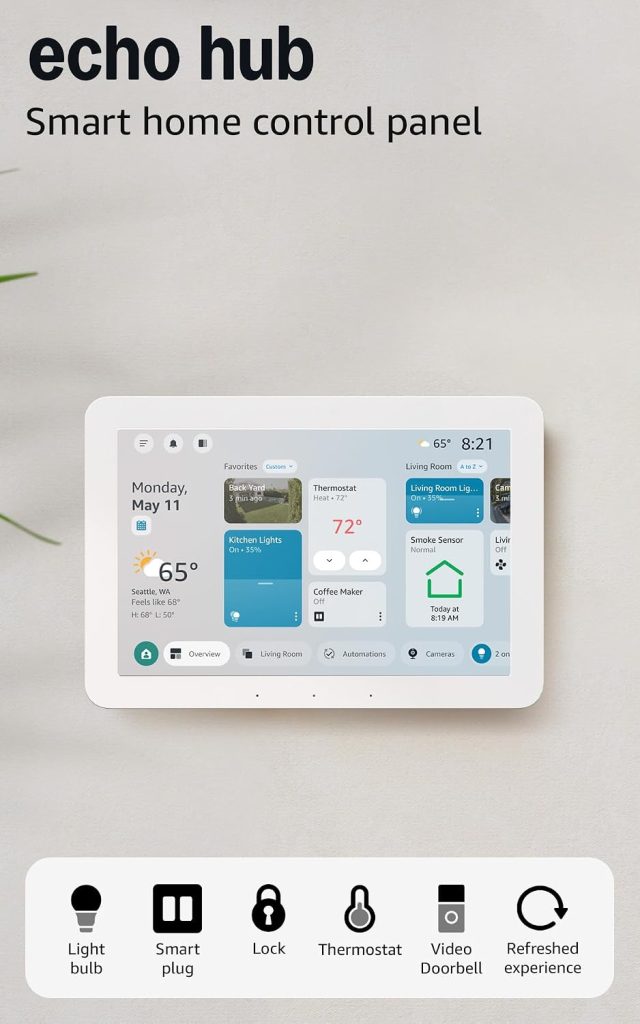
Who it’s for: Smart home owners who want a dedicated wall-mounted control panel with full hub capability
Price: ~$180 | Display: 8-inch touchscreen | Hub: Zigbee + Thread + Matter ✅
Speaker: Dual stereo (adequate — not a music device) | Camera: None
Mounting: Wall-mountable or tabletop stand included
The Echo Hub is the only Amazon device designed primarily as a smart home controller rather than a smart speaker.
The 8-inch touchscreen shows all connected devices, lights, locks, cameras, thermostats, sensors in a dashboard view you can tap to control directly.
Unlike the Echo Show range, which shows content and has smart home control as a secondary feature, the Hub exists specifically for the smart home dashboard use case.
Full Zigbee hub, Thread border router, and Matter controller in one unit. IKEA Tradfri, Aqara, SONOFF, Innr, and any Zigbee 3.0 device pair directly; no separate bridge required.
Thread-based Matter devices connect through the built-in Thread border router.
The Hub’s local processing means Zigbee device commands execute faster than cloud-routed alternatives. Wall mounting is the intended use.
Amazon includes the mounting hardware; the Hub attaches to a standard electrical box or sits on its included stand.
Positioned near your front door or in the kitchen, the dashboard provides at-a-glance home status without picking up a phone.
Live camera feeds from Ring and Blink cameras show directly on screen. The honest limitation: the Hub is not a music device.
The dual stereo speakers produce adequate sound for Alexa responses and notifications. For rooms where music matters, the Echo (4th Gen) or Echo Studio serves better.
The Hub is the right answer when smart home control is the primary function, and music is secondary.
2. Amazon Echo (4th Gen) — Best All-Round Echo Speaker
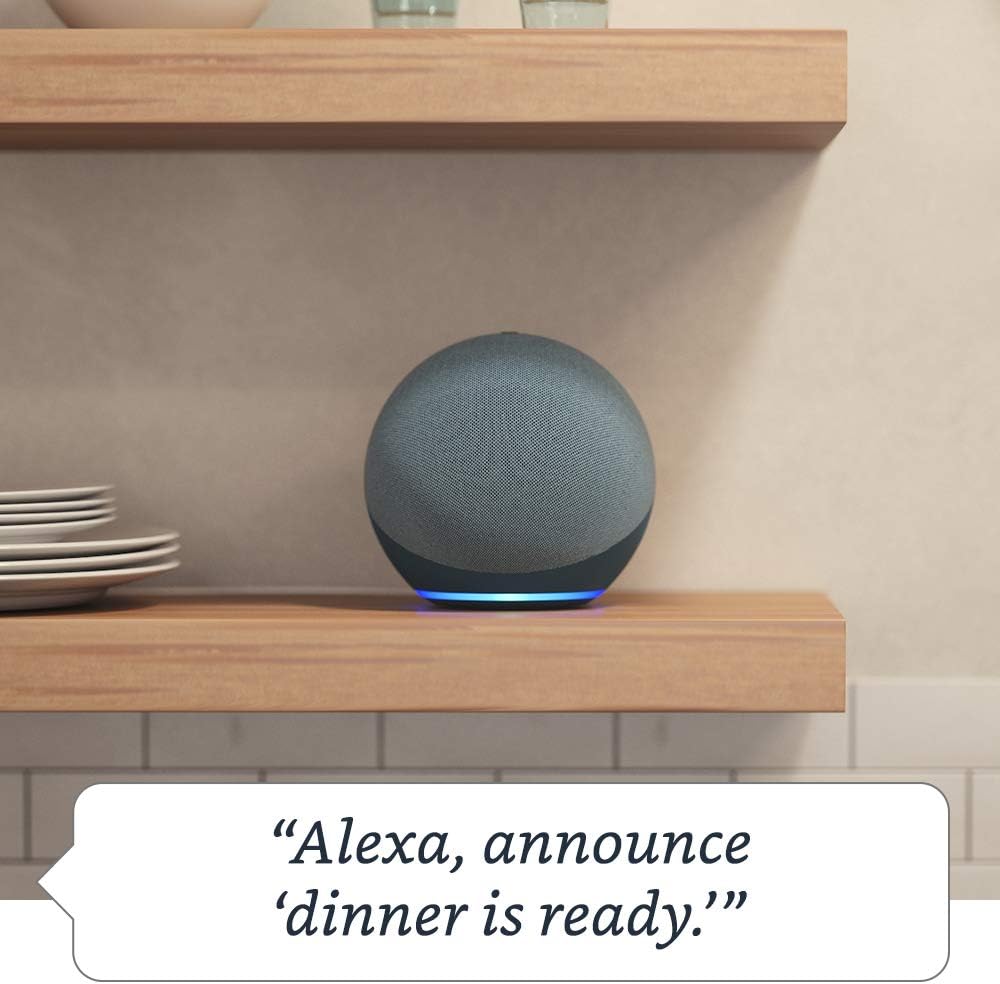
Who it’s for: Anyone wanting the best balance of sound quality, hub capability, and Alexa functionality in a standard speaker
Price: ~$100 | Speaker: 3-inch woofer + dual front-firing tweeters | Hub: Zigbee + Thread + Matter ✅
Temperature sensor: Yes — detects ambient room temperature for automations
Display: None | Alexa+: Full (free with Prime)
The Amazon Echo (4th Gen) is the most complete single Echo device for most homes.
It sounds significantly better than the Dot or Pop; the 3-inch woofer with dual tweeters fills a medium room with balanced audio rather than the tinny output of smaller Echo devices.
It includes the full Zigbee hub and Thread border router. And it has a built-in temperature sensor, an overlooked feature that enables automation triggers based on room temperature without any external sensor purchase.
The temperature sensor, specifically, is worth calling out. “When the living room temperature drops below 18°C, turn on the smart radiator valve” is a real Alexa automation that uses the Echo’s own sensor. No extra hardware.
For households managing heating room-by-room, this adds automation capability that most buyers don’t realise comes in the box.
At $100, the Echo (4th Gen) is the right primary Echo for any room where Zigbee hub capability matters.
For rooms where you use Alexa primarily by voice, no display needed, the 4th Gen beats the Dot on sound and the Show 8 on hub capability.
The limitation: the spherical design takes more shelf space than the compact Dot or Pop.
For small shelves or areas where footprint matters, the Dot (5th Gen) delivers similar functionality at half the price, accepting the trade-off of no Zigbee hub capability.
3. Echo Dot (5th Gen) — Best Budget Echo Speaker
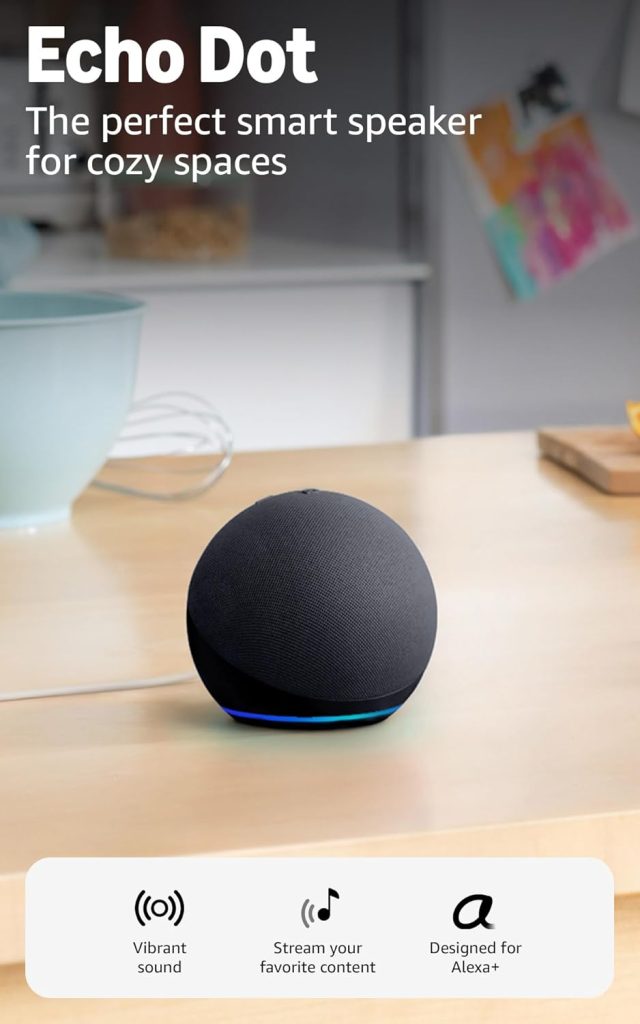
Who it’s for: Budget buyers, multi-room setups, children’s rooms, home offices — any situation where a capable Alexa speaker is needed without hub priority
Price: ~$50 | Speaker: 1.73-inch front-firing speaker | Hub: Matter controller (Wi-Fi only — no Zigbee, no Thread)
Motion detection: Yes — detects movement for presence-based automations
Alexa+: Full (free with Prime)
The Echo Dot (5th Gen) is the most popular Echo device and the right answer for secondary rooms.
At $50, it delivers full Alexa+ capability, improved bass over the 4th Gen Dot, and a new motion detection sensor that wasn’t in previous Dots.
The motion sensor detects presence in the room and enables presence-based automations, “when the Dot detects motion after midnight, turn on the hallway light at 20%.”
For multi-room Echo setups where one primary Echo (4th Gen or Hub) handles Zigbee connectivity, Dots in every other room extend Alexa coverage at minimal cost.
A home with a 4th Gen Echo in the living room and Dots in the bedroom, home office, and kitchen has whole-home Alexa voice control for under $250 total.
Echo Dot vs Echo Pop: which budget Echo to buy: the Dot (5th Gen) wins for nearly every situation.
The Dot has a full 360-degree speaker design, motion detection, a temperature sensor, and better sound quality than the Pop.
The Pop’s only advantage is its smaller half-sphere form factor, better for very tight shelves. Unless counter space is the deciding factor, choose the Dot.
4. Echo Pop — Best Compact Budget Echo
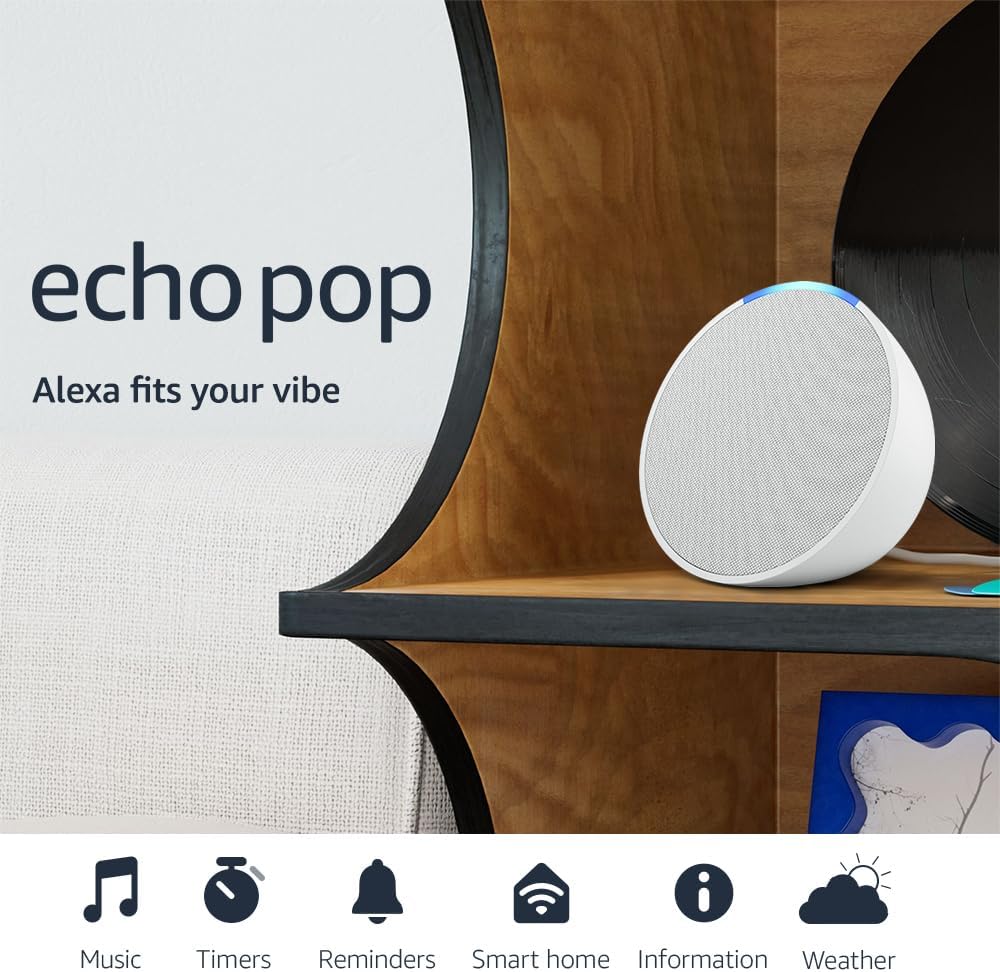
Who it’s for: Very tight spaces, renters wanting minimal footprint, first Echo at the lowest price
Price: ~$35 | Speaker: 1.95-inch front-firing speaker | Hub: Matter controller (Wi-Fi only — no Zigbee, no Thread)
Colours: Available in Lavender, Midnight Teal, Glacier White, Charcoal
Alexa+: Full (free with Prime)
The Echo Pop is the entry point to the Alexa ecosystem.
At $35, regularly discounted to $25–$30 on Prime Day, it delivers full Alexa+ voice control in the smallest Echo footprint available.
The half-sphere sits flush against a wall rather than projecting forward, right for a bedside table or small shelf where the Dot feels oversized.
Sound quality is adequate for Alexa responses, timers, and casual music in small rooms.
It won’t fill a medium or large room, and it doesn’t produce the bass of the Dot or Echo. For dedicated listening, any other Echo is better. The Pop’s case is form factor and price, not audio performance.
The kids’ Echo question: Amazon sells an “Echo Pop Kids” and an “Echo Dot Kids”; these are standard Echo Pop and Dot devices with a coloured case and a 1-year Amazon Kids+ subscription bundled in. The subscription adds parental controls and curated content.
If you already have or don’t want Amazon Kids+, buy the standard Pop or Dot and save the premium. If Kids+ is valuable for your household, the bundle pricing may work out correctly.
5. Echo Studio — Best Amazon Echo for Music
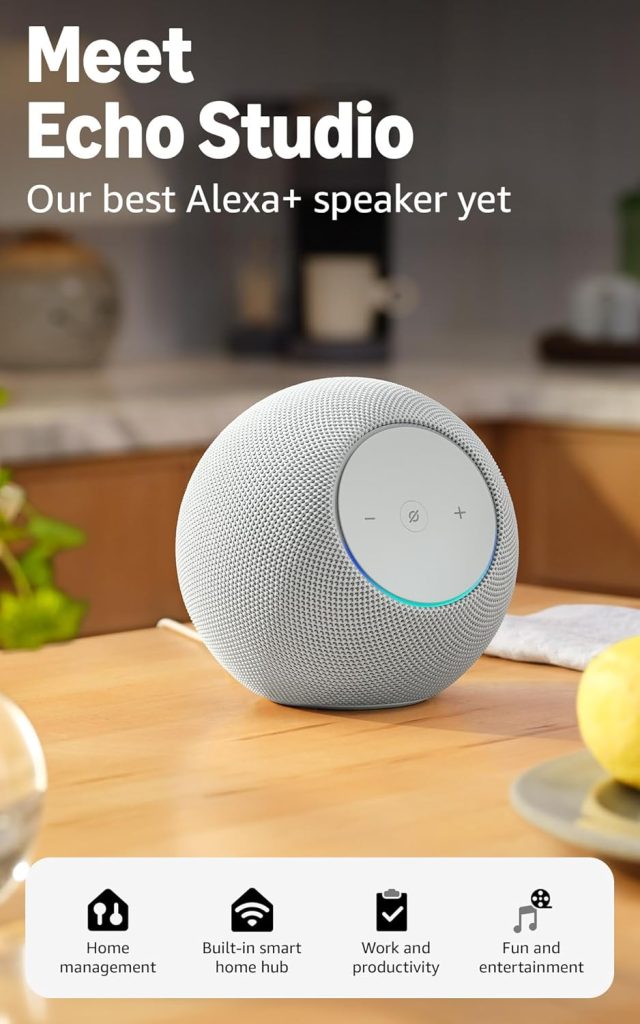
Who it’s for: Music listeners who want the best audio from an Echo without buying a separate speaker
Price: ~$219 | Speaker: Five drivers: 5.25-inch woofer, 3-inch midrange, three 0.8-inch tweeters | Hub: Zigbee + Thread + Matter ✅
Audio: Dolby Atmos, Sony 360 Reality Audio, 3D spatial audio | AZ3 Pro chip
The Echo Studio is the only Echo that competes with a dedicated Bluetooth speaker in audio quality.
Five drivers, including a 5.25-inch subwoofer, deliver Dolby Atmos and Sony 360 Reality Audio. No other Echo comes close in sound.
For a home where music is a priority and a separate speaker system isn’t in the budget, the Studio fills a medium to large room properly.
The 2nd Gen Echo Studio added the AZ3 Pro processor, Amazon’s custom chip designed specifically for the demands of Alexa+ generative AI interactions.
Response times for complex Alexa+ requests are measurably faster on the Studio than on older Echo hardware running the same software.
Full Zigbee hub, Thread border router, and Matter controller are included, with the same hub capability as the Echo (4th Gen) and Echo Hub.
The Studio is the right primary Echo for open-plan living areas where music quality matters alongside smart home control.
Pair two Echo Studios for stereo separation via the Alexa app; each unit acts as one channel. The combination delivers audio performance that was previously achievable only with a separate hi-fi system and smart speaker integration.
At $420 for a pair, this is expensive but compelling for music-first households.
6. Echo Show 8 (3rd Gen) — Best Echo Show for Most Homes
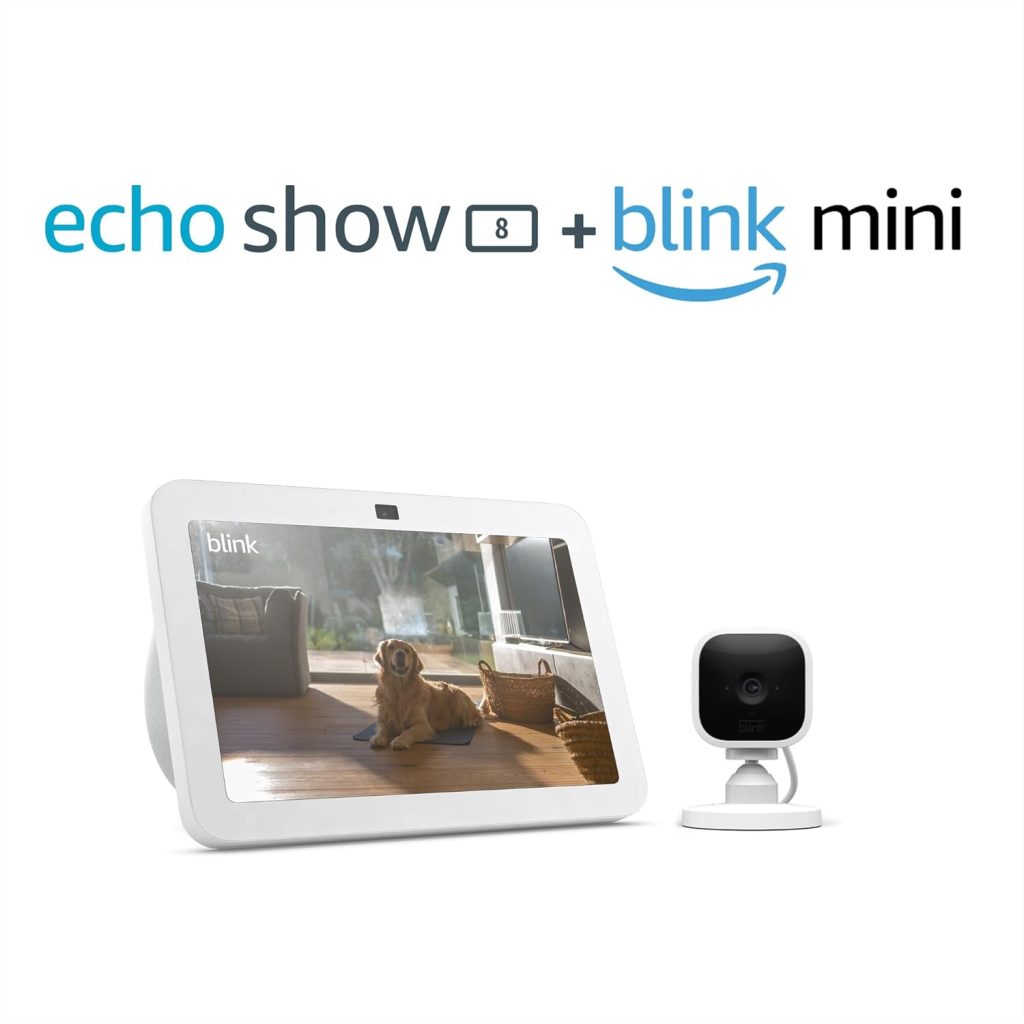
Who it’s for: Kitchens, bedrooms, and home offices wanting a display for recipes, video calls, and media — without the size of the Show 15 or 21
Price: ~$150 | Display: 8-inch, 1280×800 | Camera: 13MP, auto-framing
Hub: Matter controller (Wi-Fi only — no Zigbee, no Thread) | Speaker: 2x 2-inch drivers
Alexa+: Full (free with Prime)
The Echo Show 8 is the best value Echo Show for most households.
The 8-inch display is large enough for recipes, video calls, and camera feeds to be clearly readable from counter height.
It’s compact enough for a kitchen counter, nightstand, or desk without dominating the space.
The 13MP camera with auto-framing tracks movement during video calls. If you move around the kitchen while on a call, the frame follows you.
For households that regularly use Drop In or video call family on Echo Show devices, this is a meaningful quality-of-life feature versus the fixed cameras on older Show models.
The Show 8’s smart home dashboard shows device status, camera feeds, and controls in a touch interface.
“Swipe down for smart home” brings up a control panel, lights, locks, thermostat, camera, touchable from the display.
Combined with Alexa+ voice commands, it functions as a kitchen or bedroom hub without requiring the Echo Hub’s dedicated form factor.
Echo Show 8 vs Echo Show 15: which to buy: the Show 8 is right for bedside tables, kitchens, and desks. The Show 15 (~$250) has a larger 15.6-inch display designed to wall-mount in common areas as a shared family dashboard.
If the display is primarily for one person in one location, Show 8. If it’s a shared screen in a hallway or kitchen visible from a distance, Show 15.
7. Echo Spot — Best Echo for Bedrooms
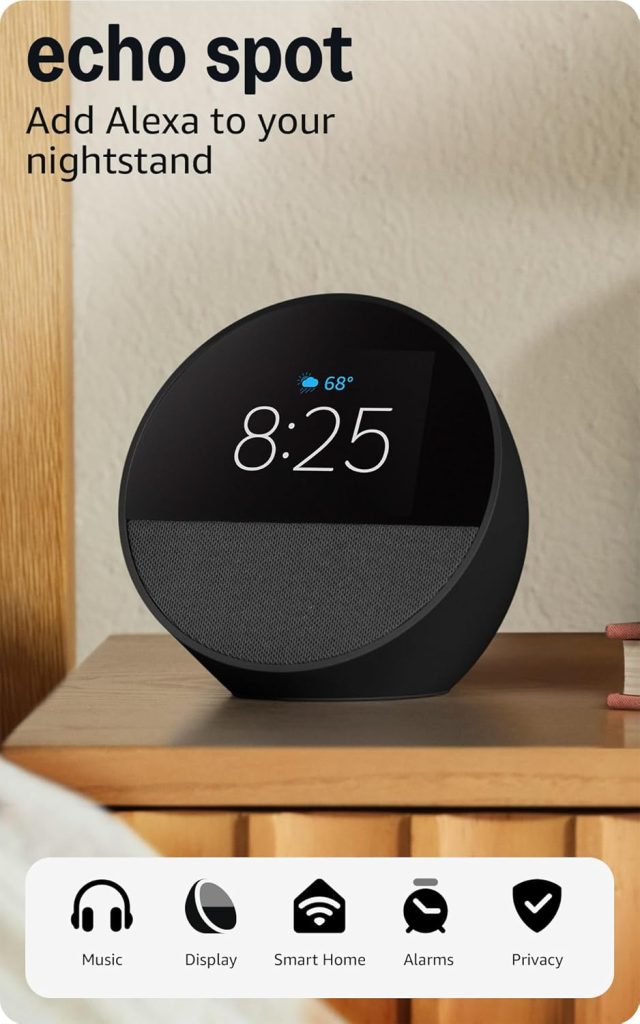
Who it’s for: Bedrooms where a small clock display and Alexa are wanted without a full show-size screen
Price: ~$80 | Display: 2.8-inch round clock face | Hub: Matter controller (Wi-Fi only)
Speaker: Single front-firing speaker | Alexa+: Full (free with Prime)
The Echo Spot is designed for one room: the bedroom. The 2.8-inch round display shows the time, date, weather, and alarm status in a bedside clock form factor.
It’s smaller than any other Echo Show; the footprint is comparable to a standard alarm clock, and the round display suits a bedside table better than the rectangular Show form factor.
Functionality matches the standard Dot for Alexa tasks: timers, alarms, smart home control, Alexa+ conversations.
The display adds a clock and weather at a glance without the brightness of a full Show screen at bedtime. The Spot dims automatically in low-light conditions to avoid disturbing sleep.
Echo Spot vs Echo Dot for the bedroom: the Spot costs $30 more than the Dot. That premium buys the clock display.
If a visible clock face matters, or if you use Alexa to check the weather before getting up without reaching for a phone, the Spot earns the difference.
For a bedroom where the phone already serves as an alarm, the Dot at $50 is the more economical choice.
Best Amazon Echo by Room: The Placement Guide
This is how most buyers actually think about Echo purchases, not by model name but by room. Here’s the right Echo for each space.
Best Amazon Echo for the kitchen
Echo Show 8 or Echo (4th Gen). The kitchen is the strongest case for a display: recipes hands-free, timers visible on screen, video calls while cooking. The Show 8 at $150 handles all of this.
If a display isn’t important and hub capability is, to connect IKEA or SONOFF Zigbee devices — the Echo (4th Gen) at $100 with its Zigbee hub is the better choice.
Best Amazon Echo for the bedroom
Echo Spot or Echo Dot (5th Gen). Bedrooms don’t need large displays. The Spot ($80) gives a bedside clock with Alexa. The Dot ($50) gives the same Alexa capability at $30 less without the display.
The Dot’s motion sensor also enables presence-based automations, “when the bedroom Dot detects no motion for 30 minutes after midnight, turn off any lights that were left on.”
Best Amazon Echo for the living room
Echo (4th Gen) or Echo Studio. Living rooms prioritise audio quality. The Echo (4th Gen) fills a standard living room adequately and includes Zigbee hub capability. The Echo Studio fills larger spaces with superior sound and also includes Zigbee + Thread.
If music quality in the main room matters, choose the Studio. For average listening with smart home priority, the 4th Gen is the better value choice.
Best Amazon Echo for the home office
Echo Dot (5th Gen). Offices need a capable Alexa device for timers, reminders, calendar, and smart home control, but sound quality matters less than in living areas. The Dot at $50 delivers full Alexa+ for the desk without the cost or footprint of a larger device.
Best Amazon Echo for smart home control hub
Echo Hub. If the primary purpose is smart home control, visual dashboard, Zigbee device management, room-based controls, the Hub is the purpose-built answer. Wall-mount it near the entrance or in the kitchen. Every connected device is visible and controllable from the touchscreen.
All Amazon Echo Devices 2026 — Full Comparison
| Device | Price | Display | Zigbee hub | Best room | Best for |
|---|---|---|---|---|---|
| Echo Hub | ~$180 | 8″ touch | ✅ | Entrance/kitchen | Smart home dashboard, Zigbee control |
| Echo (4th Gen) | ~$100 | None | ✅ | Living room | Best all-rounder, Zigbee hub + music |
| Echo Studio | ~$219 | None | ✅ | Living room | Best sound, Dolby Atmos, Zigbee hub |
| Echo Show 10 | ~$250 | 10″ motion | ✅ | Kitchen/office | Rotating display, Zigbee hub, video calls |
| Echo Show 8 | ~$150 | 8″ touch | ❌ | Kitchen/bedroom | Best value display, recipes, video calls |
| Echo Dot (5th Gen) | ~$50 | None | ❌ | Bedroom/office | Best budget, motion sensor, multi-room |
| Echo Spot | ~$80 | 2.8″ round | ❌ | Bedroom | Bedside clock + Alexa |
| Echo Pop | ~$35 | None | ❌ | Any secondary room | Cheapest Alexa, small footprint |
Frequently Asked Questions About Amazon Echo Devices
Which Amazon Echo is the best to buy in 2026?
The best Amazon Echo for most buyers is the Echo (4th Gen) at ~$100.
It has the best balance of audio quality, hub capability, and Alexa+ features in the speaker lineup.
For a dedicated smart home control panel, the Echo Hub at ~$180 is the purpose-built choice.
For budget buyers or secondary room coverage, the Echo Dot (5th Gen) at ~$50 delivers full Alexa+ functionality at the lowest practical price.
For music quality above everything else, the Echo Studio at ~$219 is the only Echo that competes with dedicated Bluetooth speakers.
Is Alexa Plus worth it in 2026?
If you’re an Amazon Prime member, Alexa+ is already included at no extra cost — so the question is moot.
For non-Prime households, the $19.99/month Alexa Standard plan gives full Alexa+ on Echo devices.
However, Amazon Prime at $14.99/month includes Alexa+ plus fast shipping, Prime Video, Amazon Music, and all other Prime benefits, making the standalone Alexa plan rarely the right choice financially.
For smart home control specifically, Alexa+ is a meaningful upgrade over the original Alexa: natural language routine creation, smarter device management, and the ability to complete tasks like restaurant bookings and grocery orders through voice.
Which Echo devices have a built-in Zigbee hub?
Four Echo devices include a built-in Zigbee hub alongside Thread and Matter: the Echo Hub, Echo (4th Gen), Echo Studio (2nd Gen), and Echo Show 10 (3rd Gen+).
The Zigbee hub lets these devices connect directly to Zigbee sensors, bulbs, and switches without a separate bridge.
The Echo Dot, Echo Pop, Echo Spot, and Echo Show 8 do not have Zigbee; they support Matter via Wi-Fi only.
If you own or plan to buy Zigbee devices, choose one of the four Zigbee-capable models as your primary Echo.
What is the difference between Echo Dot and Echo Pop?
The Echo Dot (5th Gen, ~$50) is the better buy in almost every comparison.
It has a 360-degree speaker design that sounds better than the Echo Pop’s front-facing speaker, a motion detection sensor for presence-based automations, a temperature sensor, and identical Alexa+ capability.
The Echo Pop (~$35) costs $10 less and has a smaller half-sphere form factor that sits flush against walls, its only meaningful advantage.
For most buyers, the Dot’s extra features are worth the $10 difference.
Can Echo devices work without Amazon Prime?
Yes, every Echo device works without Prime, Alexa voice control, smart home automation, music from Spotify or other streaming services, and all standard Alexa features function without a subscription.
The difference in 2026 is Alexa+, the AI-upgraded assistant, which requires either a Prime membership or the $19.99/month Alexa Standard plan on Echo hardware.
The original Alexa remains available on all Echo devices at no cost, timers, music, smart home control, and questions all work. Alexa+ adds conversational AI and agentic task completion.
Final Verdict — Which Amazon Echo Should You Buy?
✅ Best single Echo for most homes — living room, best balance of everything
Buy: Amazon Echo (4th Gen, ~$100).
Zigbee hub, Thread border router, Matter controller, temperature sensor, best audio in the speaker lineup. Full Alexa+ free with Prime. The right primary Echo for any room where smart home hub capability and sound quality both matter.
✅ You want a smart home control dashboard — wall-mounted or counter
8-inch touchscreen dashboard. Full Zigbee hub, Thread, Matter. Designed specifically for smart home control, not a music device. Wall-mountable near your front door or kitchen. The purpose-built smart home controller in the Echo lineup.
✅ Budget buyer, secondary room, or building a multi-room Echo setup
Buy: Echo Dot (5th Gen, ~$50).
Full Alexa+. Motion sensor. Temperature sensor. Best budget Echo. Right for bedrooms, offices, and any room where a primary hub-capable Echo already exists and you just need Alexa coverage. $50 per room is the most efficient way to extend whole-home Alexa.
✅ Music is the priority — you want the best sound from an Echo
Dolby Atmos, Sony 360 Reality Audio, and five drivers, including a 5.25-inch subwoofer. Zigbee hub included. The only Echo that competes with a dedicated speaker system. Pair two for stereo separation. Right for open-plan living areas where music quality justifies the price.
✅ You want a display for the kitchen or bedroom without paying for a large Show
Buy: Echo Show 8 (3rd Gen, ~$150).
8-inch display. 13MP auto-framing camera. Recipes, video calls, camera feeds, media playback. The best-value display Echo. Right for kitchen counters and bedroom nightstands where a full show-size screen would be excessive.
