


When setting up your smart home, you will likely encounter two primary protocols: Zigbee and Z-Wave.
Both protocols are pretty excellent when it comes to home automation.
However, in the debate of Zigbee vs Z-Wave, which one should you go for?
Admittedly, the differences between Zigbee and Z-Wave can significantly help you choose one suitable for your smart home.
However, before going through the 10 differences between Zigbee and Z-Wave, let’s look at each protocol in detail.
What is Zigbee?
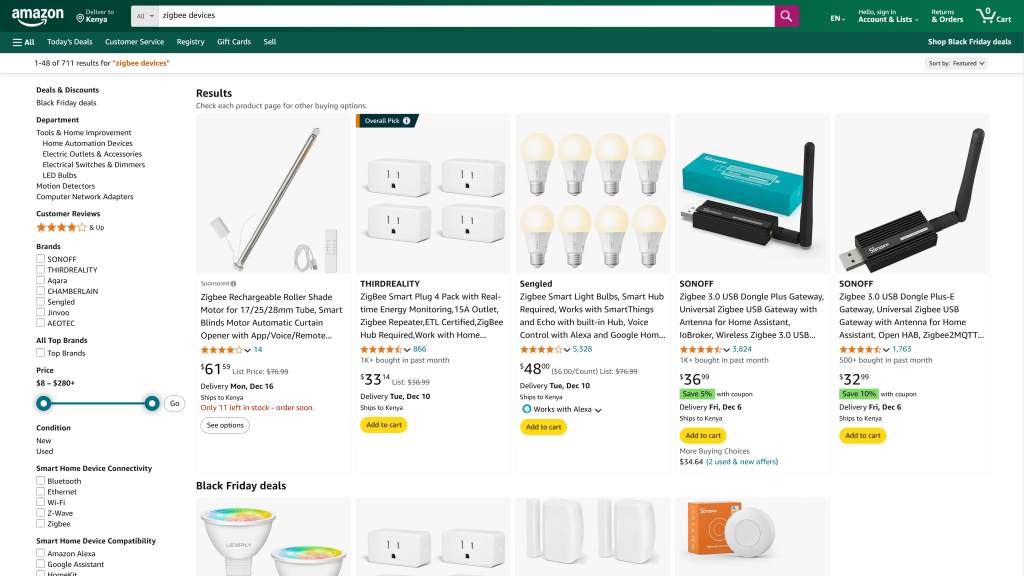
Zigbee is a wireless protocol used for home automation and low-power devices.
It operates primarily in the 2.4 GHz spectrum bell, which is also used by Wi-Fi networks and links.
That makes Zigbee very flexible and supports many devices from all over the world.
Since Zigbee uses a mesh network, where devices relay information to other devices, communication can be improved, especially in large homes.
Additionally, this wireless protocol supports up to 60,000 devices in one network.
Well, that means it’s possible to implement vast smart homes with its help.
Zigbee typically raises the range to connect distant devices by enabling infinite transitions between devices.
Nevertheless, there are some disadvantages to using Zigbee.
It employs a 2.4 GHz frequency, so it can be troubled by nearby Wi-Fi routers, microwave ovens, and other home appliances.
Moreover, Zigbee can’t rival Z-Wave in power issues. In simple terms, many smart devices require power and recharging more frequently.
Even though Zigbee is already popular, individual variants like Zigbee 3.0 might not be fully compatible.
If you consider setting up an extensive system of different brands, you will likely encounter compatibility problems.
If speed is the biggest focus in your smart home, Zigbee is the one that shines. It transfers data at a speed of up to 250 Kbps.
Clearly, Zigbee is very suitable for applications that require a fast reaction time of a device that is fast, such as turning on and off the lights and setting the temperatures of a house.
What is Z-Wave?
Z-Wave is similar to Zigbee but is a home automation wireless protocol operating at different frequencies.
North American Z-Wave operates within the 908.42 MHz frequency range, which minimizes interference from Wi-Fi or other home appliances.
As a result, the Z-Wave wireless protocol for a smart home is a perfect option for a crowded home network.
Mesh networking is also good in the case of Z-Wave, like Zigbee, but it can support a few devices in a network with a maximum of up to 232.
Its range per device is also longer than Zigbee’s, extendable up to 100 meters in the open field, and restricts the number of hops to 4.
Although Z-Wave’s range may not be a problem in most houses, it may pose a problem if a home has many stories or thick walls.
However, Z-Wave devices usually function without any hitch because the compatibility standard is relatively high.
You will always get compatibility when using Z-Wave-certified devices with any Z-Wave hub.
One of Z-Wave’s major strengths is that it’s very power efficient.
Z-Wave is used in smart locks, security sensors, and remote control devices that incorporate a long-lasting battery.
Unfortunately, it’s slower than Zigbee, with a maximum data transfer rate of 100 Kbps.
Still, if you can use Z-waves in most home applications, you won’t see a big difference in speed.
10 Key Differences Between Zigbee Vs Z-Wave
Now that you know enough about Zigbee and Z-Wave, let’s look at the 10 differences that will help you decide which is best for your smart home.
1. Frequency Band
The number of times each protocol is used significantly determines its performance.
Zigbee primarily operates in the 2.4 GHz band, which is a good frequency, which quality Wi-Fi devices also employ.
Although the 2.4 GHz frequency band for Zigbee may cause some degree of interference, it means there will be compatibility.
On the other hand, Z-Wave works on a single frequency of 908.42 MHz. Sadly, due to restrictions on usage, it won’t cover most of the Wi-Fi.
When it comes to the Zigbee and Z-Wave questions, you should know that if you have any concerns regarding Wi-Fi interference, the correct answer will be Z-Wave.
However, if you need worldwide compatibility, Zigbee might be the best solution.
2. Speed
When comparing Zigbee and Z-Wave, speed is critical. Zigbee has a data rate of up to 250 kbps, while Z-Wave supports a data rate of only 100 kbps.
However, if you want your smart home devices to respond to your commands more quickly, Zigbee does just that.
Still, you might need to consider the power consumption of your devices, as higher speed is associated with higher power consumption.
3. Power Consumption
If energy efficiency is a matter of concern, then the Zigbee vs Z-Wave becomes a little more complicated.
Z-Wave devices typically require less power, which is excellent for battery-driven devices like smart locks.
Zigbee is faster but consumes more power, so you may have to replace the batteries more often.
4. Device Compatibility
When it comes to compatibility, Z-Wave is the best. It guarantees that all Z-Wave devices will operate in unison, disregarding the company that developed them.
However, Zigbee is incompatible between the different versions even though it’s used widely.
For instance, Zigbee devices from different versions may not work well together.
If you are focused on compatibility, then you will find Z-Wave more secure in the Zigbee vs. Z-Wave comparison.
5. Device Capacity
The question that may be running through your mind now is how many devices can you connect?
Zigbee can handle an incredible 65,000 devices within a single mesh network.
However, Z-Wave can accommodate as many as 232 devices. Still, that is more than what most homes could ever need.
To prove that Zigbee is the winner regarding device capacity, it’s still more scalable if you have a rather large smart home system.
6. Range
Another significant criterion when comparing Zigbee vs Z-Wave is the network coverage.
While Z-Wave may only support up to 232 devices, it has a higher range of up to 100 meters per device.
Zigbee, in contrast, can reach only 10-20 meters per device.
However, Zigbee makes up for this by limiting the number of hops between devices to none and expanding the network.
Z-Wave, for instance, commands that the number of hops is restricted to four, a disadvantage in coverage, especially in large residences.
7. Security
While comparing Zigbee vs Z-Wave, both have robust security features.
Their technologies use AES-128 encryption, the same as that of financial institutions.
This means your smart home devices will be safe from hackers regardless of your chosen protocol.
However, all Z-Wave products must meet the same standards to be compatible.
Moreover, there are probably fewer security flaw risks than with Zigbee, where different versions may open new gates.
8. Interference
Interference is probably one of the biggest issues distinguishing Zigbee and Z-Wave.
As pointed out above, Zigbee can function at the same frequency as the Wi-Fi signal, so it may interrupt it.
Z-Wave operates on a less congested frequency band, is not much affected by Wi-Fi interference, and is, therefore, more reliable in dense networks.
If you are in an environment that uses a lot of Wi-Fi, you may prefer Z-Wave for a more seamless experience.
9. Cost
As with any other Zigbee vs. Z-Wave comparison, costs also vary.
Zigbee devices are often cheaper because of the open standard, and manufacturers have more flexibility in developing them.
Z-Wave devices are slightly more costly than other devices, but the upside is that they are less likely to interfere with each other.
However, for those who focus more on cost, Zigbee seems to be more available at the elementary level.
10. Efficiency
If you are considering a perfect solution for your smart home, Zigbee transmits high bandwidth and power. The network works for gadgets such as lights and thermostats.
Conversely, Z-Wave networks are ideal for devices that need low bandwidth but high range, such as smart locks and motion sensors.
While Philips Hue is one of the most famous brands that use Zigbee, Z-Wave is preferred by systems like Abode.
What Is The Difference Between Zigbee And Z-Wave?
Zigbee and Z-Wave are two protocols that are used to communicate smart home devices.
The major differences could be about the bands, total time taken for the device to operate, power consumption, amount of traffic supported, and the capability of the device to multiplex with other devices.
Zigbee employs 2.4 GHZ frequency, has a data rate, and can have a maximum of 65000 devices in a network.
On the flip side, Z-Wave functions at 908.42 MHz, consumes less power and can support up to 232 devices without interference.
Which Protocol Is Faster, Zigbee Or Z-Wave?
Zigbee offers a higher data transfer rate, varying between 250 Kbps and 300 Kbps, thus being faster than the Z-Wave.
The Z-wave wireless protocol has a low data transfer rate of between 100 Kbps and 200 Kbps.
Still, Zigbee is faster than Z-Wave but consumes more power than Z-Wave.
The Z-Wave might be slower but, again, is relatively more powerful.
Is The Range Of Z-Wave Higher Than That Of Zigbee?
Z-Wave devices can have a more extended range, up to 100 meters in the clear, compared to Zigbee’s 10-20 meters.
However, Zigbee can have as many hops as possible in a mesh network to cover a larger area than Z-Wave, which only allows four hops.
Conclusion
Zigbee and Z-Wave are two friendly wireless standards for transmitting information in a smart home setting.
While Zigbee is more favorable for passively transferring information, Z-waves are ideal for continuous home automation without interference.
In the debate of Zigbee vs. Z-wave, the fact is that Zigbee works best for you if you need speed and a large device network.
However, Z-Wave consumes less power and has better compatibility with its connected devices.
Also Read:
