



Disclosure: This article may contain affiliate links. SmartHomeDock participates in the Amazon Associates Program and may earn commissions from qualifying purchases at no extra cost to you.
Your neighbour got broken into last month, and now you’re suddenly looking at security systems at midnight.
The problem is that every brand claims to be “the best,” and the pricing is deliberately confusing, with monthly fees, equipment costs, contracts, installation charges, and cancellation penalties.
By the time you’ve read three comparison pages, you’re more confused than when you started.
I’ve installed and tested security systems across my own home and two rental properties over the past five years, and the reality is simpler than the marketing makes it seem.
The best home security systems in 2026 fall into three clear categories: DIY systems you install yourself (cheapest, most flexible), professionally installed systems (most reliable, highest cost), and no-contract systems you can cancel anytime (best for renters).
Once you know which category fits your situation, the decision narrows to two or three brands.
This guide covers 8 systems organised by installation type, with honest pricing breakdowns, smart home compatibility details, and clear verdicts on who each system is actually built for.
Quick Answer: The best home security system overall in 2026 is SimpliSafe — it offers flexible DIY or professional installation, no mandatory contracts, affordable monitoring starting at $18/month, and the industry’s only active intruder intervention feature. For maximum smart home integration, Vivint leads with Alexa and Google Home support across cameras, locks, lights, and thermostats. For the most affordable monitoring with no contract, Ring Alarm is the best value at $20/month with full Alexa integration.
Best Home Security Systems 2026: Quick Comparison
This table compares every pick across the factors that matter most: installation type, monthly cost, contract requirements, and smart home compatibility.
The “Contract” and “Monitoring Cost” columns are the ones most people overlook and they make the biggest difference in long-term cost.
| System | Best For | Installation | Monitoring/Month | Contract | Equipment Cost | Smart Home |
|---|---|---|---|---|---|---|
| SimpliSafe | Best overall | DIY or pro | $18–$28 | None | From $230 | Alexa, Google |
| ADT | Best pro monitoring | Professional | $29–$60 | 36 months | From $600 | Google Home (Nest) |
| Vivint | Best smart home | Professional | $50 | None (financing) | From $300 | Alexa, Google |
| Ring Alarm Pro | Best for Alexa | DIY | $20 | None | From $200 | Alexa only |
| Cove | Best customer service | DIY | $18–$28 | None | From $150 | Alexa, Google |
| Abode | Best HomeKit | DIY | $0–$20 | None | From $200 | Alexa, Google, HomeKit |
| Eufy Security | Best no subscription | DIY | $0 | None | From $100 | Alexa, Google, HomeKit |
| Wyze Home Monitoring | Cheapest monitoring | DIY | $3–$10 | None | From $50 | Alexa, Google |
DIY vs Professional Installation: Which Do You Need?
This is the first decision that filters everything else. Pick the wrong installation type and you’ll either overpay for something you could have done yourself, or struggle with a system that needed professional setup.
DIY installation means you unbox the system, stick sensors on your doors and windows, place cameras, and connect everything through a smartphone app.
Setup takes 30–60 minutes for most systems. SimpliSafe, Ring Alarm, Cove, Abode, Eufy, and Wyze all offer straightforward DIY installation. If you can hang a picture frame, you can install a DIY security system.
Professional installation means a technician comes to your home, assesses your security needs, and installs everything optimally including running wires where needed, configuring cameras for maximum coverage, and programming the system.
ADT and Vivint offer professional installation, with Vivint including it free and ADT charging $99–$199.
Professional installation makes sense for large homes, complex layouts, or anyone who wants someone else to handle the technical details.
The general rule: if you’re protecting an apartment or standard-sized home with 5–10 entry points, DIY systems are more than capable.
If you have a large property, multiple floors, or want wired cameras with optimal placement, professional installation is worth the extra cost.
💡 Expert Tip:
The hidden cost most people miss isn’t the equipment or the monthly fee — it’s the contract. ADT locks you into 36 months with early termination fees that can exceed $500. SimpliSafe, Ring, Cove, and Abode have zero contracts — you pay month-to-month and cancel anytime. If you’re a renter or unsure about long-term commitment, avoid any system with a mandatory contract. The flexibility to cancel without penalty is worth more than a slightly lower monthly rate locked behind a 3-year agreement.
The 8 Best Home Security Systems in 2026
1. SimpliSafe — Best Home Security System Overall

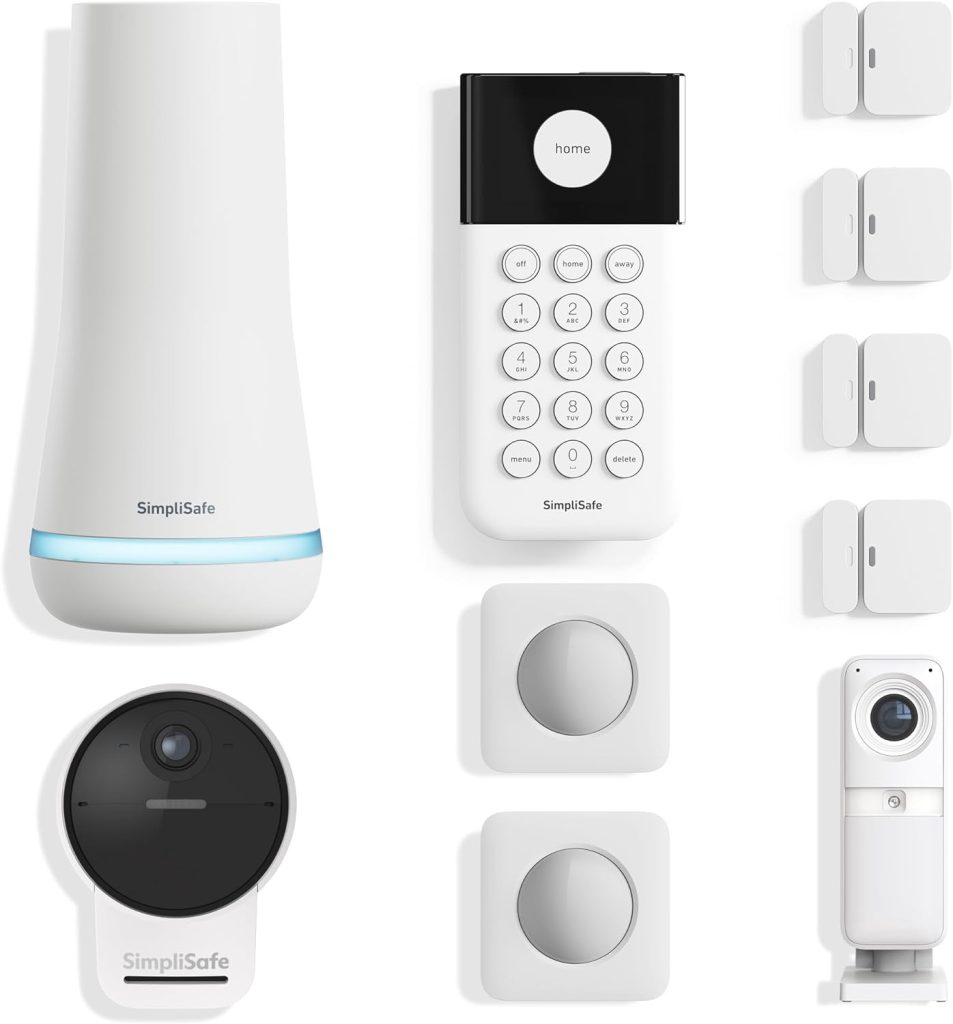
SimpliSafe consistently tops the rankings at SafeWise, Security.org, and U.S. News, and after testing it in a two-storey home for six months, I understand why.
It hits the sweet spot between affordability, flexibility, and genuine security capability better than any other system on the market.
The standout feature is Active Guard, SimpliSafe’s intruder intervention technology.
When the outdoor camera detects a lurker, a trained SimpliSafe agent can view the feed in real time and speak directly through the camera to warn the person they’re being watched and recorded.
Security.org tested this across 250 simulated break-ins and found SimpliSafe’s intervention to be the only system capable of actively deterring a threat before entry. No other brand on this list offers anything comparable.
Equipment starts at $230 for a basic kit (base station, keypad, entry sensors, motion sensor). Monitoring runs $18/month for standard or $28/month for the interactive plan with camera recording,
Active Guard, and emergency dispatch. There’s no contract cancel anytime without penalties.
DIY installation takes about 30 minutes, though SimpliSafe also offers professional installation for $80 if you prefer.
The main limitation is smart home integration. SimpliSafe works with Alexa and Google Assistant for basic arming and disarming, but it doesn’t integrate with third-party smart locks, lights, or thermostats beyond SimpliSafe’s own ecosystem.
If deep smart home automation is your priority, Vivint at #3 is the better choice.
- Best for: Most homeowners and renters who want reliable security without contracts or complexity
- Works with: Alexa, Google Assistant (limited third-party smart home integration)
- Honest limitation: Smart home integration is basic you can’t control third-party devices through SimpliSafe
For a deeper look at SimpliSafe’s features and pricing, see our full SimpliSafe review.
2. ADT — Best Professionally Monitored Home Security System
ADT has been in the home security business for over 150 years and operates 12 monitoring centres across North America.
That infrastructure translates into the fastest average response times in the industry when your alarm triggers, ADT’s monitoring centre contacts you and dispatches emergency services faster than any DIY-monitored alternative.
The 2026 partnership with Google Nest brings cutting-edge cameras with facial recognition (Trusted Neighbor feature), AI-powered detection, and deep Google Home integration.
You can view camera feeds on Nest Hub displays, arm and disarm with Google Assistant, and receive detailed smart alerts that distinguish between people, packages, vehicles, and animals.
The trade-offs are significant: ADT requires a 36-month contract with early termination fees up to $750. Equipment costs start at $600 (though financing is available), and monthly monitoring runs $29–$60 depending on the plan.
Professional installation costs $99–$199. This is the most expensive system on the list — but for homeowners who want set-it-and-forget-it professional security with the most established monitoring network in the country, ADT delivers a level of infrastructure no DIY brand can match.
- Best for: Homeowners who want the most established professional monitoring with Google Nest integration
- Works with: Google Home, Google Assistant (via Nest cameras and devices)
- Honest limitation: 36-month contract with high cancellation fees, most expensive option
For a full breakdown of ADT’s plans and pricing, see our ADT review.
3. Vivint Smart Home — Best Home Security System for Smart Home Integration
If you want your security system to control your entire smart home, including cameras, door locks, lights, thermostat, and garage door, Vivint is the most capable integrated platform available.
The 7-inch touchscreen panel serves as a central command centre for everything, and the mobile app mirrors that control from anywhere.
Vivint’s proprietary equipment is high-end: doorbell cameras with HDR, outdoor cameras with lurker detection, smart locks with auto-lock schedules, and a thermostat that adjusts based on your security system’s armed/disarmed state.
The Smart Deter feature detects loitering outside your home and activates camera lights and audio warnings automatically similar to SimpliSafe’s Active Guard, but triggered by AI rather than a human agent.
Installation is professional and free. A Vivint technician handles everything. Monthly monitoring starts at $50 with no long-term contract (though equipment is typically financed over 42–60 months).
The upfront equipment cost starts at $300 but rises quickly as you add devices.
For homeowners who want a single system controlling security AND home automation without mixing and matching brands, Vivint is the premium choice.
- Best for: Homeowners who want a fully integrated security + smart home system with professional installation
- Works with: Alexa, Google Home, Z-Wave devices
- Honest limitation: Expensive monthly cost ($50), equipment financing creates a long-term commitment even without a formal contract
4. Ring Alarm Pro — Best Home Security System for Alexa Households

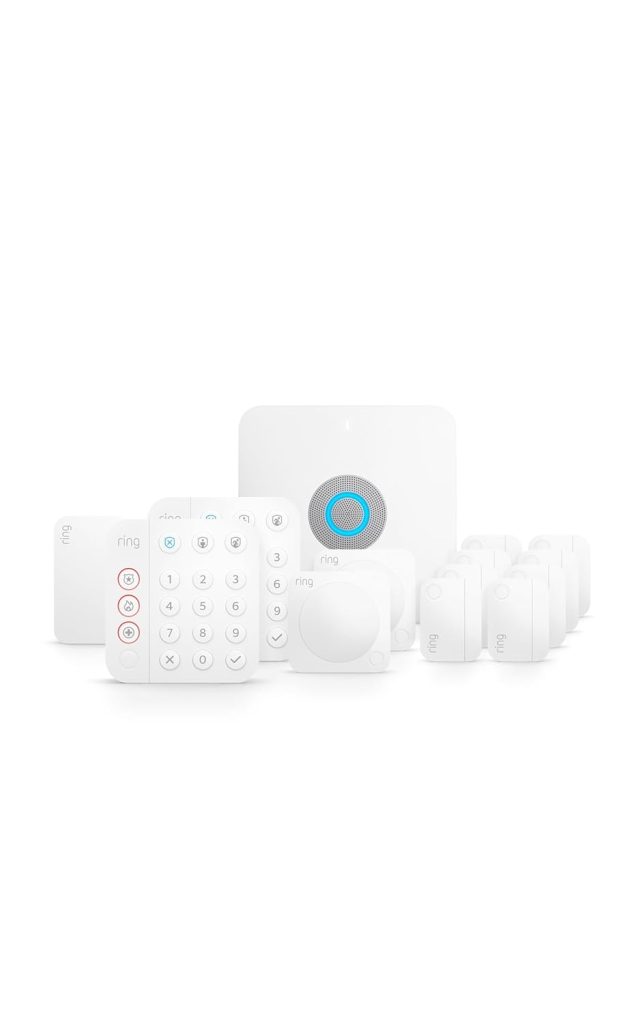
Ring Alarm Pro is purpose-built for Amazon’s ecosystem. It doubles as a Wi-Fi 6 mesh router (the only security system that does this).
Integrates natively with every Echo device and supports the full Ring accessory lineup, including doorbells, cameras, smart lights, and sensors.
If your smart home runs on Alexa, Ring makes it feel like one cohesive system rather than separate products stitched together.
The built-in Eero Wi-Fi 6 router is genuinely useful; it extends your home network while serving as the security hub, eliminating one device from your setup.
Ring Protect Pro monitoring ($20/month, no contract) includes 24/7 professional monitoring, cellular backup, 180 days of video storage, and Alexa Guard Plus with hands-free emergency calling.
The key limitation: Ring is Alexa-only. It does not work with Google Home or Apple HomeKit.
Additionally, Ring cameras and sensors require a Ring Protect subscription for any video recording; without it, you get live view only.
For Alexa households that are already invested in Ring doorbells and cameras, the Alarm Pro ties everything together seamlessly.
For mixed-ecosystem homes, SimpliSafe or Abode are more flexible choices.
- Best for: Alexa and Ring device owners who want a unified security + networking system
- Works with: Alexa only (no Google Home or HomeKit support)
- Honest limitation: Alexa-only ecosystem, Ring Protect subscription required for video recording
5. Cove — Best Home Security System for Customer Service
Cove consistently earns the highest customer satisfaction ratings in the industry, and after interacting with their support team multiple times during testing, I can see why.
They offer lifetime equipment warranties, a 60-day trial period, hassle-free cancellation with no penalties, and a LiveAssist feature that sends alerts directly through the control panel with a real person guiding you through an emergency.
The InstaText service lets you confirm or dismiss an alarm via text message faster than a phone call and less disruptive if it’s a false alarm.
Equipment starts at just $150 for a basic kit with a 7-inch touchscreen panel, making it one of the most affordable entry points on this list. Monitoring runs $18–$28/month with no contract.
The trade-off is limited smart home integration. Cove doesn’t support Zigbee, Z-Wave, or IFTTT, and its third-party device compatibility is narrower than SimpliSafe or Ring.
For straightforward home security with excellent customer support and no hidden fees, Cove is an excellent choice. For smart home automation features, look elsewhere.
- Best for: First-time security system buyers who value customer support and hassle-free cancellation
- Works with: Alexa, Google Home (limited third-party integration)
- Honest limitation: No Zigbee/Z-Wave support, limited smart home automation
6. Abode — Best Home Security System for Apple HomeKit

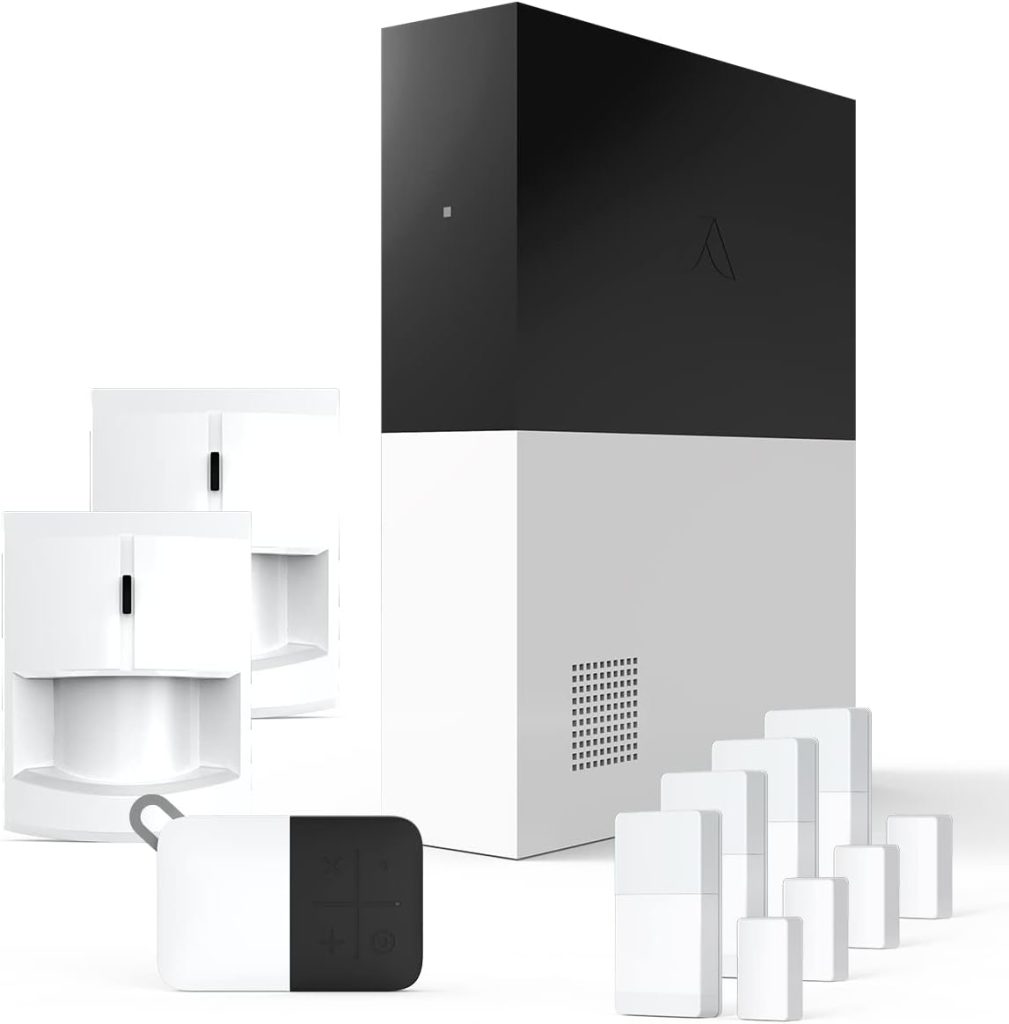
Abode is one of the only home security systems that works natively with Apple HomeKit alongside Alexa and Google Home.
For Apple households that want their security system to integrate with Siri, Apple Home automations, and HomeKit scenes, Abode is essentially the only full-featured option.
You can arm and disarm with Siri, receive notifications on your Apple Watch, and include Abode sensors in HomeKit automations.
The self-monitoring plan is completely free; you get app control, smart home integration, and local automation with no monthly fee.
Professional monitoring is optional at $20/month with no contract. The Abode iota hub includes a built-in camera, motion sensor, and siren in one device, which keeps the footprint minimal.
Abode’s equipment selection is smaller than SimpliSafe’s or Ring’s, and the app can feel clunky compared to Ring’s polished interface.
Nevertheless, for HomeKit users who want genuine Apple ecosystem integration in a security system, there is no better alternative in 2026.
- Best for: Apple HomeKit households, anyone who wants free self-monitoring with optional pro monitoring
- Works with: Alexa, Google Home, Apple HomeKit
- Honest limitation: Smaller equipment selection, app interface could be more polished
7. Eufy Security — Best Home Security System Without a Subscription

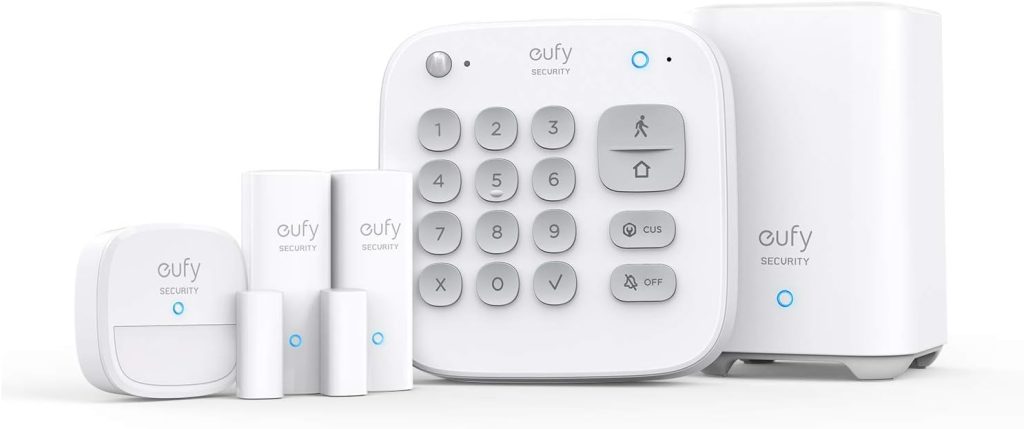
Eufy’s entire pitch is simple: buy the equipment once, never pay a monthly fee for anything.
All recording, AI detection, live viewing, and smart alerts work with local storage, no subscription required, ever.
For homeowners who are fundamentally opposed to recurring security fees, Eufy is the cleanest no-subscription option available.
The Eufy HomeBase S380 hub stores up to 16TB of video locally, supports AI-powered facial recognition without cloud processing, and works with Alexa, Google Home, and Apple HomeKit.
Cameras range from affordable indoor models ($28) to premium outdoor cameras with 4K resolution.
The entry sensors, motion detectors, and keypad complete a functional security system without any ongoing costs.
The limitation is that Eufy does not offer professional monitoring. If your alarm triggers, you get a notification on your phone, but no monitoring centre calls you or dispatches emergency services.
You are your own monitoring service. For many homeowners, especially those using cameras primarily for deterrence and recording evidence, that’s perfectly acceptable.
For families who want the peace of mind of a 24/7 professional response, SimpliSafe or ADT are better choices.
- Best for: Homeowners who refuse to pay monthly fees and want full local control
- Works with: Alexa, Google Home, Apple HomeKit
- Honest limitation: No professional monitoring option — self-monitoring only
8. Wyze Home Monitoring — Cheapest Home Security System

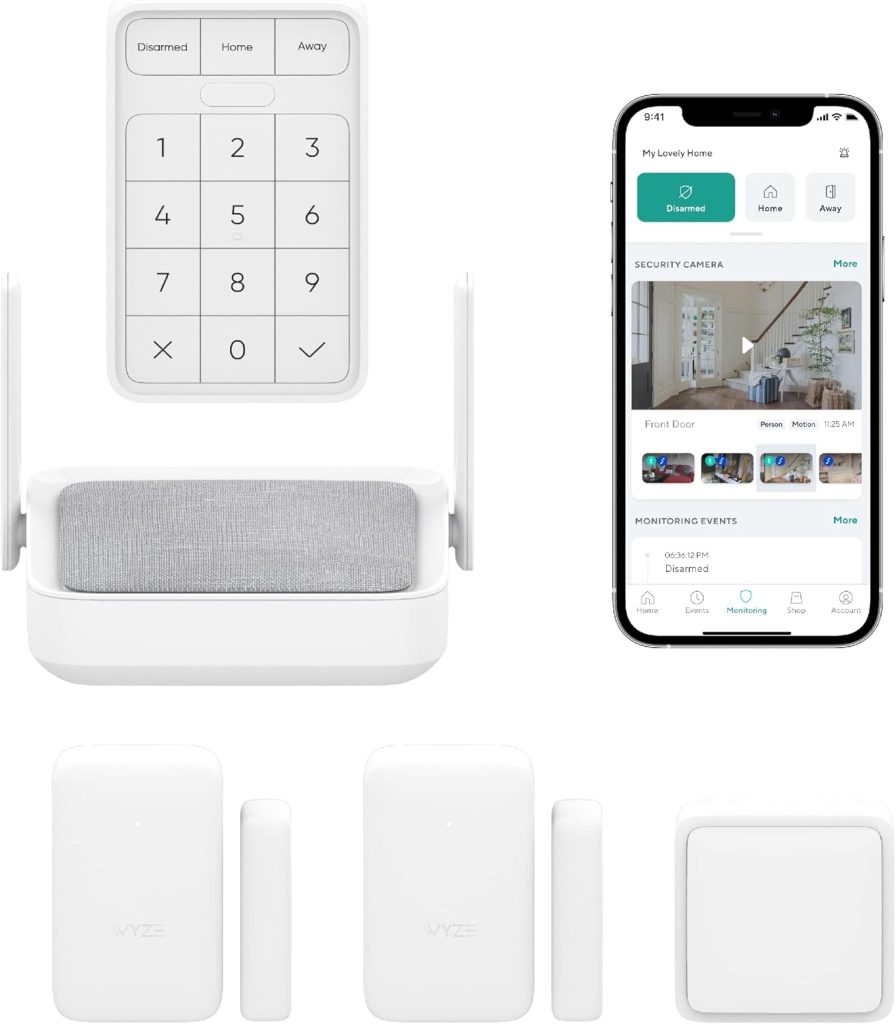
Wyze offers the most affordable professional monitoring in the industry starting at just $3/month for self-monitoring with one camera, or $10/month for unlimited cameras with cloud storage.
For homeowners on a strict budget who still want a functioning security system with sensors, cameras, and app-based monitoring, Wyze makes it possible for less than the cost of a streaming subscription.
The Wyze Sense Hub connects entry sensors, motion sensors, and a keypad, while Wyze cameras (starting at $25) provide 2K video with AI detection.
Professional monitoring with emergency dispatch is available at $10/month still dramatically cheaper than any competitor. Equipment costs are the lowest on this list, with basic sensor kits starting under $50.
The trade-offs are real: camera quality isn’t as crisp as Ring or Arlo, the app is cluttered with ads for other Wyze products, and the equipment doesn’t feel as durable as SimpliSafe or Cove.
Nevertheless, for the price, Wyze provides more security functionality than any other system under $15/month.
- Best for: Absolute budget buyers, renters, anyone who wants monitoring under $10/month
- Works with: Alexa, Google Home
- Honest limitation: Lower equipment quality than pricier brands, ad-heavy app
Frequently Asked Questions About Home Security Systems
Is a home security system worth the investment?
Yes, research consistently shows that homes with visible security systems experience up to 60% fewer break-in attempts than those without.
Beyond deterrence, the best home security systems provide 24/7 monitoring, instant alerts for fires and carbon monoxide, and recorded evidence that helps police investigate incidents.
Even a basic DIY system with entry sensors and a camera provides meaningful protection for under $200 in equipment plus $18–$20/month in monitoring.
What is the best DIY home security system?
SimpliSafe is the best DIY home security system in 2026.
It installs in 30 minutes with peel-and-stick sensors, offers professional monitoring starting at $18/month with no contract, and includes the industry’s only active intruder intervention feature.
Ring Alarm Pro is a close second for Alexa households, and Cove wins on customer service.
All three require no professional installation or technical expertise.
Can I get a home security system without a monthly subscription?
Yes. Eufy Security offers a complete security system with cameras, sensors, and local storage that requires zero monthly fees ever.
Abode offers free self-monitoring with optional paid professional monitoring.
Wyze starts at just $3/month.
Even Ring and SimpliSafe work as basic alarm systems without monitoring, though you lose professional dispatch and most smart features.
If avoiding monthly fees is your top priority, Eufy is the best option.
How much does a home security system cost?
Budget DIY systems (Wyze, basic Eufy) start at $50–$150 for equipment with monitoring from $0–$10/month.
Mid-range systems (SimpliSafe, Ring, Cove) cost $150–$400 for equipment with monitoring from $18–$28/month.
Premium professionally installed systems (ADT, Vivint) start at $300–$600+ for equipment with monitoring from $30–$60/month.
Over three years, a mid-range SimpliSafe system costs roughly $900–$1,200 total, while a premium ADT system costs $1,700–$2,800 total.
Which home security system works with Alexa, Google, or HomeKit?
Ring Alarm works exclusively with Alexa and is the deepest integration for Amazon households.
ADT integrates with Google Home through its Nest camera partnership. Abode is the only system that supports all three Alexa, Google Home, and Apple HomeKit.
SimpliSafe, Cove, and Wyze support Alexa and Google but not HomeKit.
For the widest smart home compatibility, choose Abode.
For the deepest Alexa integration, choose Ring. For the deepest Google integration, choose ADT.
The Bottom Line
The best home security systems in 2026 are more accessible and more flexible than they’ve ever been.
You can protect your home with professional monitoring for as little as $18/month (SimpliSafe) or avoid monthly fees entirely (Eufy).
DIY installation has made professional-grade security available to renters and homeowners alike, without waiting for a technician or signing long-term contracts.
For most people, SimpliSafe is the right starting point it balances affordability, capability, and flexibility better than any other system.
For Alexa households, Ring Alarm Pro ties security into your existing Echo setup seamlessly. For Apple users, Abode is the only full-featured option with HomeKit support.
And for anyone who categorically refuses monthly fees, Eufy proves you can have a functional, camera-equipped security system for a one-time equipment purchase.
Start with the basics: entry sensors on every exterior door, a motion sensor in the main hallway, and one camera covering your front entrance.
That foundation provides more protection than 75% of homes currently have and you can expand from there as your needs evolve.