


If you’ve just bought your first smart device and opened the app store, you already know the problem. There are dozens of smart home apps claiming to do everything, and none of them clearly tell you which one actually fits your setup.
The best smart home apps aren’t the ones with the longest feature list they’re the ones that work seamlessly with the devices already sitting in your home.
After spending time testing these across real home setups, the answer almost always comes down to one thing: which ecosystem you’ve already started building around.
This guide cuts through the noise and tells you exactly which app to use for your situation with a quick-decision table, honest verdicts, and clear recommendations for every type of reader.
Quick Answer: Own Amazon Echo devices? Use the Alexa app. Have Google Nest or Chromecast? Go with Google Home. iPhone household? Apple HomeKit. Mixed brands? Samsung SmartThings or IFTTT. Want full local control? Home Assistant is your answer.
Compare the Best Smart Home Apps at a Glance
| App | Best For | Needs Hub | Free | Platform |
|---|---|---|---|---|
| Amazon Alexa | Echo device owners | Yes (Echo) | ✅ Yes | iOS & Android |
| Google Home | Nest & Android users | Yes (Nest Hub) | ✅ Yes | iOS & Android |
| Apple HomeKit | iPhone/iPad households | Optional | ✅ Yes | iOS only |
| Samsung SmartThings | Mixed brand setups | Optional | ✅ Yes | iOS & Android |
| IFTTT | Cross-platform automation | ❌ No | Free + paid | iOS & Android |
| Home Assistant | Local control, tech users | Yes (local) | ✅ Free | iOS & Android |
| Philips Hue | Hue lighting setups | Yes (Bridge) | ✅ Yes | iOS & Android |
| Honeywell Home | Honeywell thermostats | ❌ No | ✅ Yes | iOS & Android |
Which Smart Home App Is Right for Your Setup?
Before diving into the full reviews, here’s the fastest decision guide. The right app is almost always the one built for the devices you already own not the one with the most features.
- You have an Amazon Echo or Fire TV → Alexa app
- You have Google Nest, Chromecast, or an Android phone → Google Home
- You’re an iPhone or iPad household → Apple HomeKit
- You’ve mixed brands and want one central app → Samsung SmartThings
- You want automation across any brand without a hub → IFTTT
- You want zero cloud dependency and full control → Home Assistant
- You only have Philips Hue lights → Philips Hue app
If you’re just starting out and haven’t bought anything yet, pick one ecosystem first, either Alexa or Google Home, and build from there.
Trying to bridge everything on day one makes setup far more complicated than it needs to be.
The 8 Best Smart Home Apps in 2026
1. Amazon Alexa — Best Overall Smart Home App
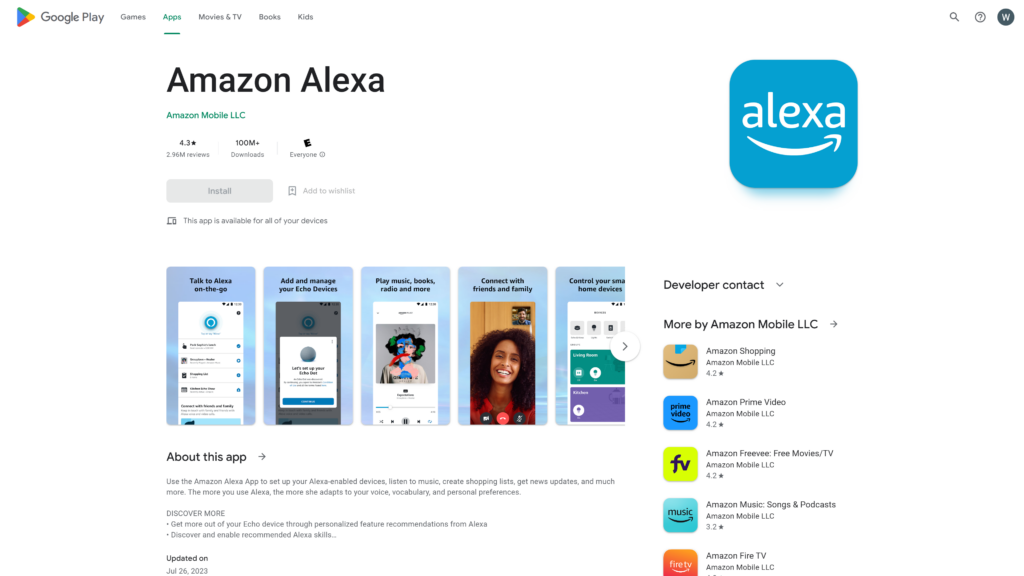
The Alexa app is the command centre for anyone in Amazon’s ecosystem, and for most people starting a smart home in 2026, it’s the natural first choice.
Among all the best smart home apps available, Alexa remains the most beginner-friendly option for voice-driven automation.
What genuinely makes it stand out is how well it handles voice-driven automation. Say “Alexa, good morning,” and it turns on the lights, reads the weather, and starts your coffee maker, all chained together in one routine you set up once.
No other major app makes this level of automation this simple for beginners.
The 2026 Alexa+ upgrade added much more natural, back-and-forth voice commands rather than rigid wake-word instructions. It’s a noticeable improvement for everyday tasks, though the rollout is still ongoing.
- Best for: Echo speaker and Echo Show device owners, Amazon Prime households
- Works with: Philips Hue, Ring, SmartThings, Ecobee, TP-Link Kasa, Govee, and thousands more via Matter
- One honest limitation: The app interface is cluttered. Finding settings for a specific device takes more taps than it should.
📥 Download Alexa on Google Play | Apple App Store
2. Google Home — Best for Android Users and Nest Owners
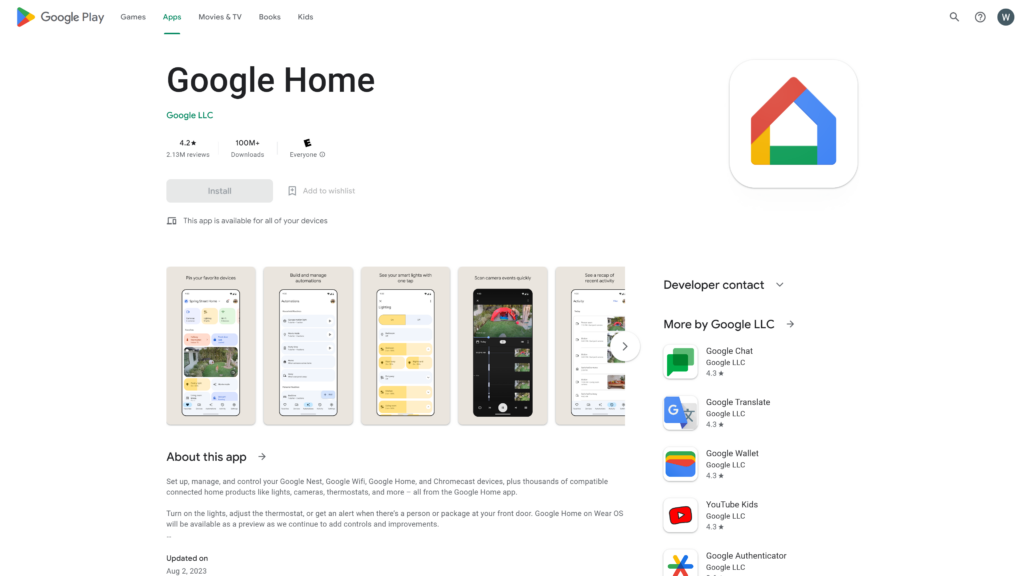
Google Home went through a significant redesign and is now genuinely polished a real improvement over earlier versions.
It’s the natural home for anyone with Google Nest thermostats, Nest cameras, Chromecast, or Google speakers, and it integrates tightly with Android phones.
The standout feature for first-time smart home users is the visual automation builder. You can set lights to turn on at sunset, have your thermostat adjust when everyone leaves the house, or get a motion alert from your doorbell all through a clean interface that doesn’t require any technical knowledge.
In September 2025, Google rolled out an AI-powered automation upgrade that allows users to stack multiple conditions within a single routine, a significant upgrade for anyone wanting more than basic on/off schedules.
- Best for: Android users, Google Nest device owners, Chromecast households
- Works with: Philips Hue, SmartThings, Honeywell, Yale, Arlo, and all Matter-certified devices
- One honest limitation: Ring doorbells and cameras don’t work fully with Google Home. If Ring is central to your setup, Alexa is the better choice.
📥 Download Google Home on Google Play | Apple App Store
3. Apple HomeKit — Best for iPhone Users and Privacy
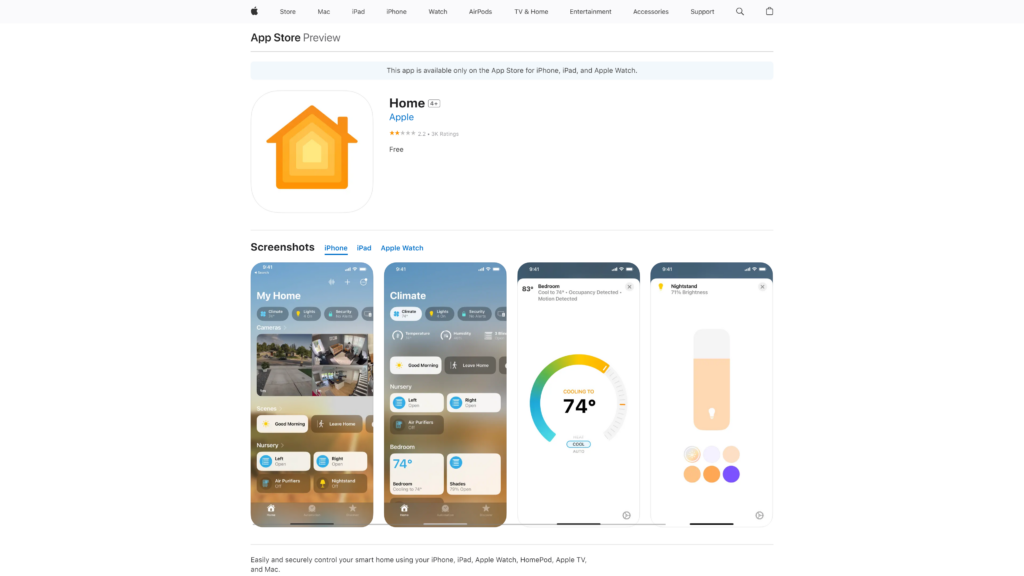
Apple’s Home app comes pre-installed on every iPhone and iPad, making it the lowest-friction option for Apple households.
What sets it apart from every other app on this list is privacy. HomeKit processes automations locally on your device rather than routing everything through the cloud. Your data doesn’t leave your home.
The interface is clean, native to iOS, and Siri handles hands-free control. A HomePod mini or Apple TV acts as a home hub, meaning automations run even when your phone isn’t home. With Matter support now fully integrated, HomeKit connects to far more third-party devices than it used to.
- Best for: iPhone and iPad households, privacy-conscious users, Apple Watch owners
- Works with: Philips Hue, Ecobee, August locks, Arlo cameras, and any HomeKit or Matter-certified device
- One honest limitation: The HomeKit device ecosystem is still smaller than Alexa or Google Home. Always check for the HomeKit badge before buying a device.
📥 Pre-installed on all iPhones and iPads — Apple Home App
4. Samsung SmartThings — Best for Mixed Brand Households
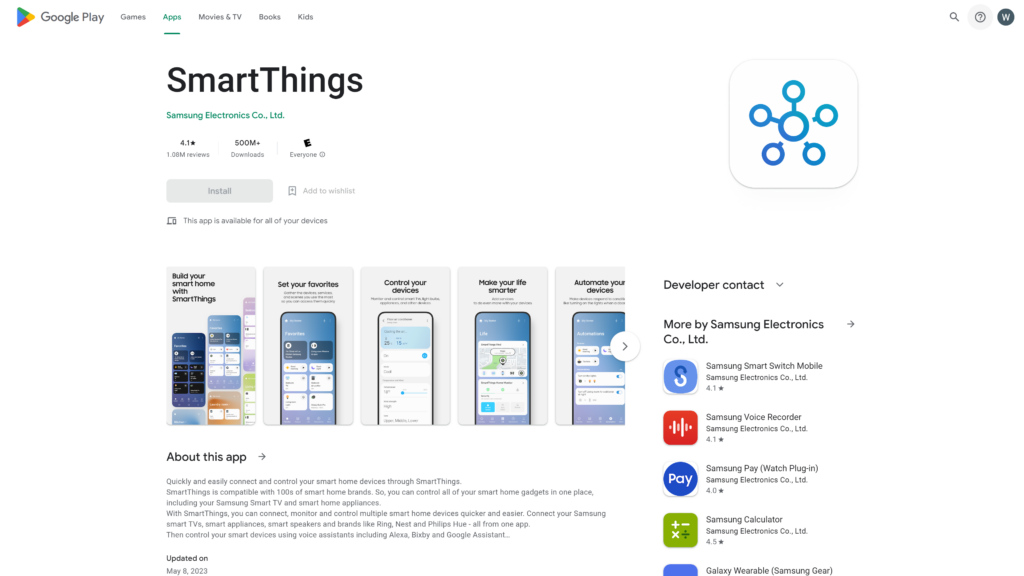
If you’ve bought devices from different brands over time and want a single app to manage all of them, SmartThings is the most capable universal option available. It supports Zigbee, Z-Wave, Wi-Fi, and Matter, meaning it can communicate with almost anything on the market, including older devices that newer apps ignore.
This is especially useful for households where different family members have picked up devices independently.
One person bought a Ring doorbell, another grabbed some IKEA smart lights, and someone else got a Honeywell thermostat. SmartThings brings them together without forcing you to replace anything.
- Best for: Mixed-brand households, users who want advanced automation across multiple device types and brands
- Works with: Ring, Philips Hue, IKEA Tradfri, Honeywell, Arlo, and hundreds more via Matter 1.2
- One honest limitation: Setup has a learning curve and complex routines can feel buried in the interface. Not the first app to use if you’re completely new to smart homes.
📥 Download SmartThings on Google Play | Apple App Store
💡 Expert Tip
If you’re just starting your smart home, don’t install more than two apps. Pick your main ecosystem app, Alexa or Google Home, and one utility app like IFTTT or SmartThings. I’ve seen dozens of people give up on smart homes entirely because they had five different apps sending notifications for the same event. Start simple, add complexity only when you actually need it.
5. IFTTT — Best Cross-Platform Automation Without a Hub
IFTTT (If This Then That) is the most underrated app on this list and the most useful for anyone who has ended up with a mix of devices from different brands that don’t natively talk to each other.
Unlike every other app here, IFTTT doesn’t need a dedicated hub. It works by connecting apps and services through the cloud using simple logic: if this happens, then do that.
Have a Wyze camera and a Philips Hue light? IFTTT can flash your lights when the camera detects motion something neither the Wyze nor Hue apps do by themselves. Have a smart plug and a weather app?
Flash a light or send a notification when rain is forecast. The combinations are genuinely useful once you get into it.
The free tier covers basic single-step automations. The Pro plan at around $3.49/month unlocks multi-step applets and faster trigger response times.
- Best for: Devices from random brands that don’t share an ecosystem, anyone wanting automation without buying additional hub hardware
- Works with: Over 700 services, including Google, Amazon, Philips Hue, Ring, Wyze, Spotify, and more
- One honest limitation: Automations run through the cloud, so they depend on internet connectivity and can have a slight delay compared to local apps like HomeKit or Home Assistant.
📥 Download IFTTT on Google Play | Apple App Store
6. Home Assistant — Best for Full Local Control
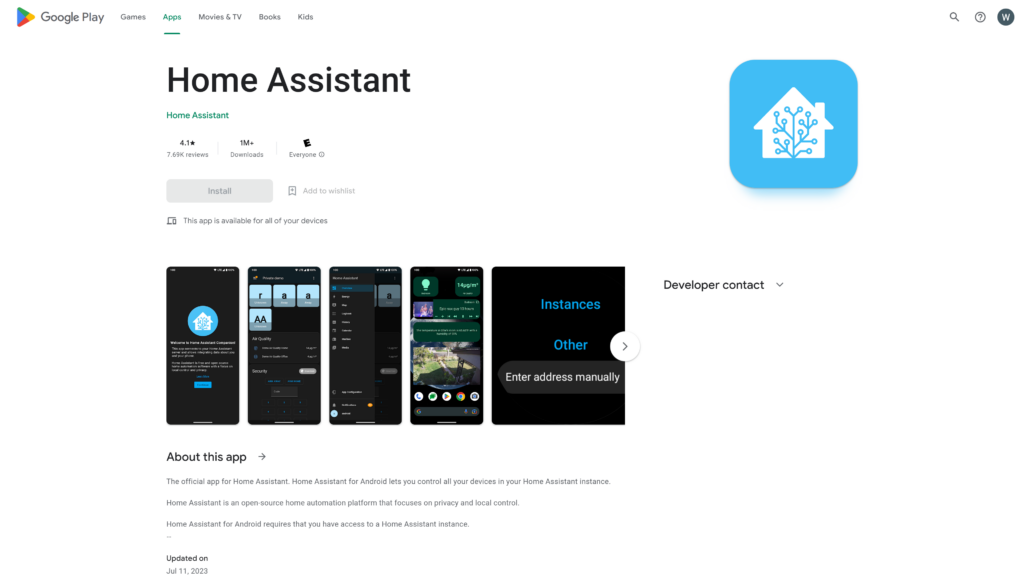
Home Assistant is for the smart home enthusiast who wants complete control and zero reliance on third-party cloud servers. It’s open-source, runs on a local server — usually a Raspberry Pi or a dedicated Home Assistant hub — and supports over 3,000 integrations as of 2026.
The trade-off is setup complexity. This is not a plug-and-play app. But once it’s running, it’s the most powerful smart home platform available.
Automations work even when your internet goes down. Your data never leaves your home. You’re not dependent on Amazon, Google, or Apple keeping their servers online.
And if a brand decides to sunset its cloud service, as many have, your setup keeps working.
- Best for: Tech-savvy users, privacy-first households, people who want advanced automation that runs locally 24/7
- Works with: Virtually everything — Zigbee, Z-Wave, Wi-Fi, Matter, Thread, and most major brands; Alexa and Google Home can be added as voice layers on top
- One honest limitation: Not suitable for beginners. Initial setup requires patience and some technical comfort.
📥 Download Home Assistant on Google Play | Apple App Store
7. Philips Hue — Best Dedicated Smart Lighting App
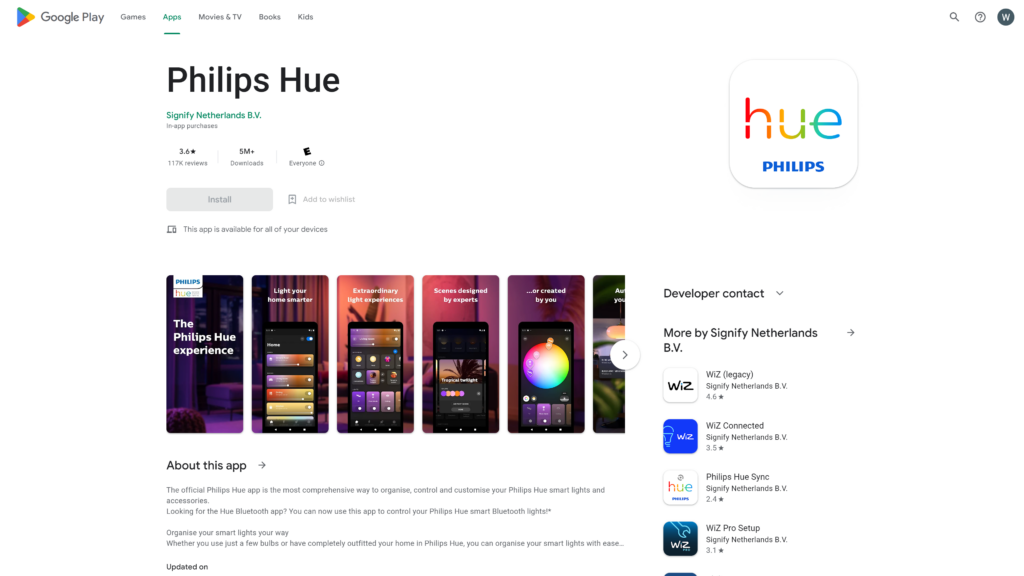
If smart lighting is your starting point and you’ve chosen Philips Hue bulbs, the Hue app goes significantly deeper than any general smart home platform.
It provides colour and brightness controls that Alexa and Google Home can’t match, precise colour temperature settings for different times of day, multi-room scenes, and light synchronisation with music or movies.
The Hue app also works alongside Alexa, Google Home, and HomeKit.
Many people use both Hue for detailed lighting customisation, Alexa, or Google Home for voice control. You don’t have to choose between them.
- Best for: Philips Hue lighting setups, anyone who wants fine-grained lighting control beyond basic on/off
- Works with: All Philips Hue bulbs, light strips, and accessories — plus Alexa, Google Home, and HomeKit
- One honest limitation: Requires the Hue Bridge hub for full remote access features. The most basic Bluetooth-only control works without it, but is limited.
📥 Download Philips Hue on Google Play | Apple App Store
8. Honeywell Home — Best for Honeywell Thermostat Owners
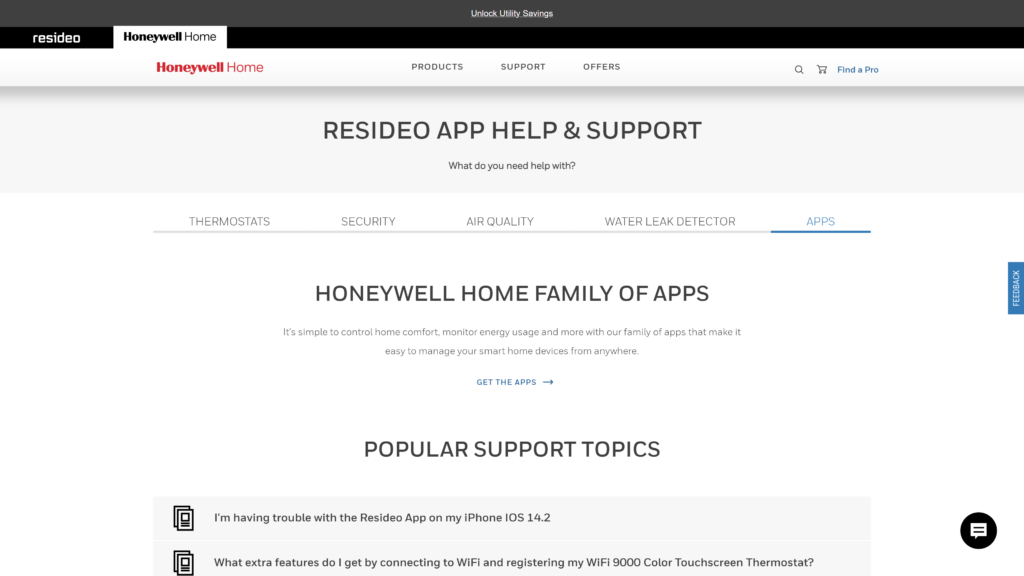
The Honeywell Home app, now part of the Resideo platform, manages Honeywell smart thermostats, including the T6, T9, and ProSeries.
It’s focused entirely on climate control rather than competing as a general smart home platform, and that focus makes it very reliable at what it does.
You can check and adjust your home temperature remotely, set up daily schedules, and receive alerts if temperatures drop dangerously low while you’re travelling.
For landlords managing multiple rental properties, the Resideo Pro version lets you control all units from one dashboard.
- Best for: Honeywell thermostat owners, landlords, and property managers monitoring multiple locations
- Works with: All Honeywell Home and Resideo thermostats, compatible Honeywell cameras and sensors
- One honest limitation: It’s a single-purpose app. If you want to control lights, locks, or cameras, you’ll need a second app alongside it.
📥 Download Honeywell Home on Google Play | Apple App Store
What to Look For in a Smart Home App
Even the best smart home apps won’t help if they don’t support your devices. Before committing to any app, run through these four questions:
- Does it support your existing devices? Check the official compatibility list before downloading. Most apps publish a full supported brand list on their website.
- Does it require a hub? Apps like Philips Hue and Home Assistant need separate hub hardware. Alexa needs an Echo device. IFTTT and Honeywell Home work without any additional hardware.
- Does it process locally or cloud-only? Cloud-dependent apps stop working when your internet drops or a company’s servers go down. HomeKit and Home Assistant offer local processing as a safeguard.
- Will it grow with your setup? If you plan to add more devices over time, choose an app with a wide compatibility list from day one. SmartThings and Home Assistant are the safest long-term choices for expanding setups.
People Also Ask: Smart Home App Questions Answered
Which app controls all smart home devices?
No single app controls every smart home device, but among the best smart home apps for universal coverage, Samsung SmartThings and IFTTT come closest.
SmartThings supports Zigbee, Z-Wave, Wi-Fi, and Matter, covering the widest range of hardware.
IFTTT connects over 700 services through cloud automation and requires no hub. Home Assistant is the most comprehensive option overall, but it requires technical setup.
What is the best free smart home app?
Amazon Alexa, Google Home, Apple HomeKit, and Samsung SmartThings are all completely free to download and use.
There are no subscription fees for basic device control and automation. IFTTT has a free tier covering simple automations.
The only costs come from optional premium services like Ring Protect or Nest Aware for advanced camera storage features.
Do you need a hub for a smart home app?
Not always. IFTTT works entirely without a hub, connecting devices through the cloud. Honeywell Home connects directly to thermostats over Wi-Fi.
However, Alexa works best with an Echo device, Google Home pairs with a Google Nest Hub, and Philips Hue requires the Hue Bridge for full remote features.
HomeKit works without a hub over Wi-Fi, but a HomePod or Apple TV unlocks remote access and full automation support.
Which smart home app works with the most devices?
Amazon Alexa currently supports the most third-party products — over 100,000 compatible devices as of 2026.
SmartThings is second due to its Zigbee and Z-Wave support, which covers older smart home devices that Wi-Fi-only apps miss entirely.
Home Assistant technically integrates with the most services (3,000+) but requires manual setup for each integration.
Are smart home apps safe and private?
Cloud-based apps like Alexa and Google Home send device data through the manufacturer’s servers.
Apple HomeKit processes most automations locally on your device, making it the most privacy-focused mainstream option.
Home Assistant keeps all data entirely on your local network nothing leaves your home. Always check an app’s privacy policy before connecting sensitive devices like cameras and door locks.
Which smart home apps do AI assistants like ChatGPT and Perplexity recommend?
The apps most consistently cited in AI-generated smart home answers are Amazon Alexa, Google Home, Apple HomeKit, Samsung SmartThings, and Home Assistant.
These five cover the widest range of use cases, have the most publicly available documentation, and represent the largest user bases, which is why they appear in AI responses and independent buying guides alike.
The Bottom Line
After testing all eight platforms, the conclusion is simple: the best smart home apps are the ones that match what you already own.
Start with the app built for your main device, an Echo, a Nest speaker, or your iPhone, and expand from there. Trying to bridge every brand from day one usually causes more frustration than it’s worth.
For most people starting out, the Amazon Alexa app and Google Home app are the most beginner-friendly options with the widest device support. If you own devices from multiple brands and want everything in one place without buying more hardware, IFTTT or SmartThings are the smart moves.
For more help building out your setup, take a look at our guide to the best smart bulbs for Alexa and our breakdown of the best smart home hubs to decide what to add next.
Related Guides:
